Why franchisee recruitment is a B2B sale
A franchise is sold to an individual, but the decision looks more like a business purchase than a consumer one. The buyer commits capital, usually borrows, signs a long contract and takes on staff, premises or vehicles. The cycle runs for months, involves a partner, a bank and often an adviser, and ends with a discovery day and legal review. That is a B2B sales process, and the marketing should be planned the same way: a defined audience, a clear qualification standard and a pipeline measured in stages.
Paid social has a specific role in that process. Search captures people who are already looking for a franchise; that is covered in our post on recruiting franchisees before they search. Paid social reaches people who fit the profile but are not yet searching: the operations manager thinking about running their own business, the redundancy candidate, the parent looking for flexible work. Its job is to put the opportunity in front of the right people early and turn a share of them into qualified enquiries.
The market is competitive. The British Franchise Association's 2024 survey counted 1,009 franchise systems and 50,421 units in the UK, and found that 50% of franchisees operate from home (Franchise Direct, 2024). Many of those systems are recruiting at any one time, often in the same feeds.
Why paid social matters: reach, timing and who franchisees are
Reach is the first reason. Ofcom reports that Facebook and Messenger together reach 93% of UK adults and WhatsApp 90% (Ofcom, 2025). Social is also where UK advertisers are spending: IAB UK puts the UK digital ad market at £40.5 billion in 2025, up 10% on the year (IAB UK, 2026).
Timing is the second. LinkedIn's B2B Institute argues that around 95% of potential business buyers are not ready to buy today, and only about 5% are in-market at any moment (LinkedIn, n.d.). Franchise buyers fit that pattern. Most people who could own a franchise are not looking this quarter. Paid social lets a franchisor stay visible to that larger group so that the brand is already known when they start.
Third, the franchisee profile is changing in ways that suit social targeting. BFA figures reported in 2026 put women at 40% of all franchisees and 34% of new recruits, and a February 2026 poll of BFA members put flexibility and work-life balance as the main reason women choose franchising, at 62% (Franchiseinfo, 2026). That poll was of a mailing list rather than a representative sample, so treat it as an indicator. Even so, it suggests that messages about flexibility and support will reach audiences that a narrow "investor" message misses.
Audiences by intent and job title
Build audiences in layers, from broad to specific, and give each layer a different job. LinkedIn lets advertisers target by job title, job function, seniority, company size, industry and member skills, and to upload contact lists or retarget site visitors through Matched Audiences; an ad set needs at least 300 members to run (LinkedIn, 2026). LinkedIn notes that reach for some attributes may be limited in the EEA and Switzerland, and the page does not cover the UK specifically, so check sizes in Campaign Manager before you plan. Meta offers broad interest and lookalike targeting with a much larger reach.
Match territories to audiences. There is no point paying to reach people in areas that are already sold, so set location targeting from your list of open territories and update it as territories close. The layers below work as a starting structure:
- Career-stage audiences (LinkedIn): managers and senior individual contributors in functions that map to your model, such as operations, sales, field service or hospitality management, with seniority set to manager or above.
- Intent audiences (Meta and LinkedIn): people who have engaged with business ownership, self-employment or franchise content, plus visitors to your recruitment pages.
- Lookalike or similar audiences: seeded from your best existing franchisees, not from all enquiries, so the platform copies the right profile.
- Retargeting: people who watched most of a franchisee video, opened a lead form without submitting, or read the investment page.
- Exclusions: existing franchisees, staff and people who have already been disqualified.
Creative for prospective owners
Creative should answer the questions an owner asks, not sell a dream. People considering a franchise want to know what a normal week involves, what it costs to start, what support they get and what existing franchisees say. Short videos of real franchisees describing their first year, clear statements of the investment range, and plain explanations of territory and training tend to filter the audience as well as attract it.
Trust matters more than polish. The 2025 Edelman and LinkedIn B2B Thought Leadership Impact Report found that 64% of hidden decision-makers trust thought leadership more than marketing materials and product sheets when judging a company's competence (Contentgrip, 2025). It is a study of business buyers generally, but the lesson carries over: honest, specific content from people who run the business persuades better than slogans.
Earnings creative is where most franchisors get into trouble. UK advertising guidance says earnings claims for business opportunities should reflect the level an average participant is likely to reach, backed by robust evidence, and the ASA has treated a headline "up to" figure as something people read as typical (ASA, 2026). If you show figures, show network averages with the basis explained, and take legal advice first.
Qualifying enquiries and cost per qualified lead
Native lead forms are easy to complete, which is both their strength and their weakness. LinkedIn reports an average Lead Gen Form conversion rate of 13%, against an average landing page rate of 4.02% in a study by Unbounce that LinkedIn cites (LinkedIn, 2025). That is a platform's own benchmark, and a high completion rate can mean many enquiries from people who will never invest. Add friction deliberately: ask about available capital, preferred area and timescale, and use Meta's higher intent form option, which adds a review step before submission.
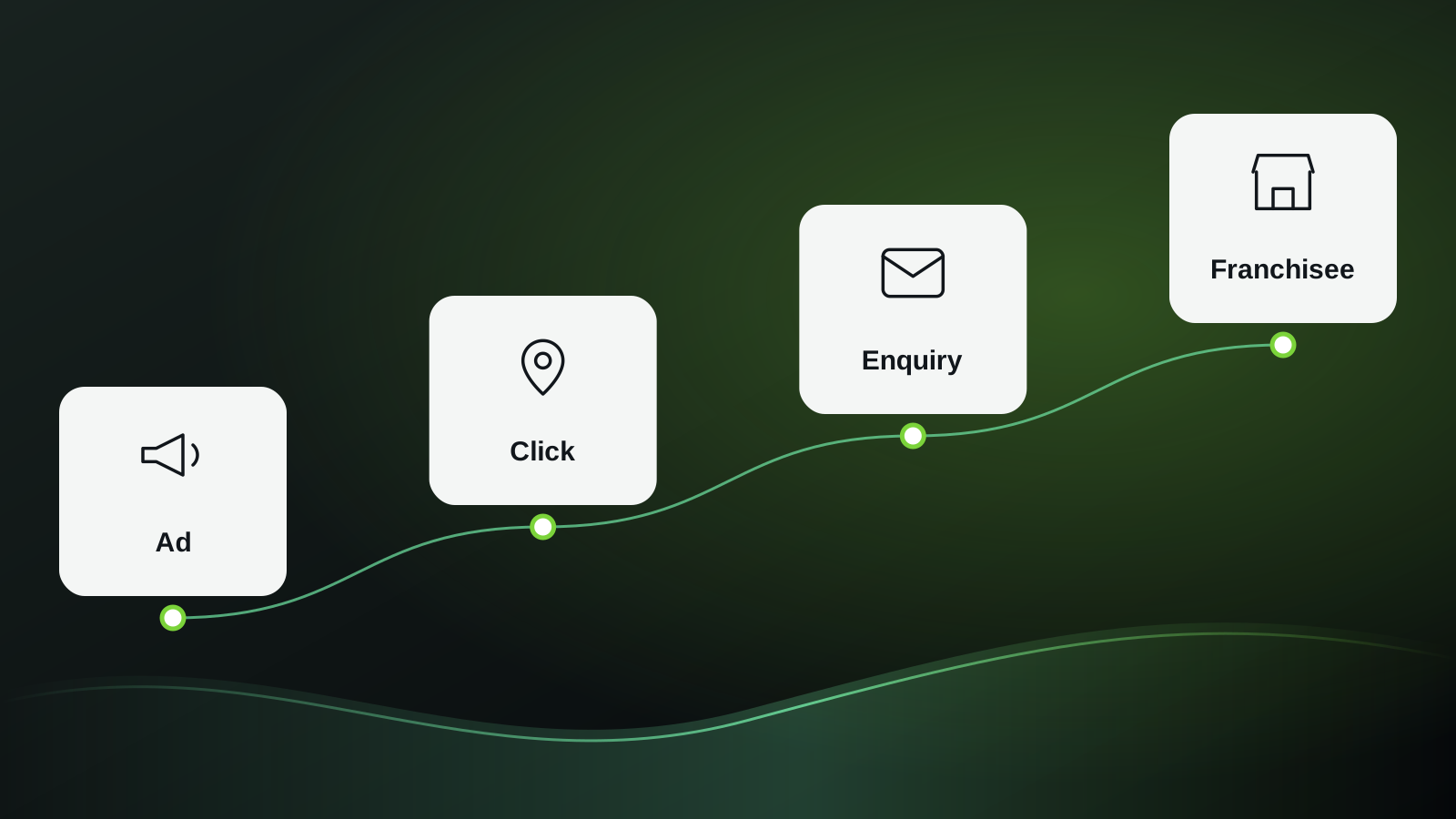
Define a qualified lead before launch, with sales. For example, a franchisor might count a lead as qualified when the applicant has the stated minimum liquid capital, wants an available territory, plans to start within 12 months and attends an introductory call. Then measure the pipeline in stages: leads, qualified leads, discovery days, approved applicants and signed agreements.
The number that matters is cost per qualified lead, and ultimately cost per signed franchisee. As a hypothetical example, a campaign spending £6,000 a month that produces 120 form fills at £50 each looks efficient; if only 12 meet the qualification standard, the cost per qualified lead is £500, and if two sign, the cost per franchisee is £3,000. Compare channels on those numbers, not on cost per lead. Connect form data to your CRM so that platform algorithms can be optimised towards qualified outcomes rather than raw form fills.
A method to follow, and common mistakes
For example, a franchisor with 25 open territories might run a 90-day plan along these lines.
Speed of follow-up matters as much as the plan. A prospective franchisee who fills in a form on a Sunday evening and hears nothing until Thursday has often moved on to the next brand in the feed, so agree a response time with the recruitment team before spending starts:
- Weeks one and two: agree the qualification standard with sales, map open territories, build audiences and exclusions, and connect lead forms to the CRM.
- Weeks three to six: run two or three creative themes (franchisee story, investment explained, support and training) against career-stage and intent audiences, with a modest budget split.
- Weeks seven to ten: cut the themes and audiences with the highest cost per qualified lead, build lookalikes from qualified leads, and add retargeting.
- Weeks eleven and twelve: review cost per qualified lead, discovery days and signed agreements by audience and creative, and set the next quarter's budget.
When paid social is the wrong channel, and what to ask a supplier
The common mistakes are judging success by cost per lead, targeting territories that are already sold, using one generic advert for every audience, letting leads sit for days before a call, and publishing earnings claims that would not stand up to scrutiny.
Paid social is the wrong channel when the model needs a very specific, licensed professional who is easy to reach directly, when territories are too few to justify building audiences, when the investment is so high that buyers come through brokers and advisers, or when the recruitment team cannot respond to leads within a day. In those cases, search, broker networks, trade events and direct outreach may serve better. Paid social also struggles when the brand is unknown and nobody has searched for it; pairing it with brand-building social activity and visible trade press helps.
If you hire an agency for B2B lead generation on social, ask how they define a qualified franchisee lead and whether they will report cost per qualified lead and cost per signed agreement. Ask how lead forms will connect to your CRM, how quickly leads reach your team, and how they will keep earnings and investment claims within advertising rules. Ask what they would do if paid social turned out to be the wrong channel. See our franchising page for how recruitment fits into wider network growth.
Put this into practice
Book a discovery call and we will review your channels and results first, then agree what to test.
Plan franchisee recruitment on paid socialQuestions and answers
Is LinkedIn or Meta better for recruiting franchisees?
It depends on the model. LinkedIn suits management and multi-unit franchises because it targets by job title and seniority. Meta reaches far more people at lower cost and suits owner-operator models. Test both and compare cost per qualified lead.
What is a good cost per lead for franchise recruitment?
Cost per lead on its own is misleading. Compare channels on cost per qualified lead and cost per signed franchisee, using a qualification standard agreed with your sales team before the campaign starts.
Should we use native lead forms or a landing page?
Native forms convert more people, which raises volume but can lower quality. Add qualifying questions about capital, location and timescale, or send higher-intent audiences to a landing page with full investment details.
Can we show franchisee earnings in social ads?
Only with care. UK advertising guidance says business opportunity earnings claims should reflect what an average participant is likely to achieve, backed by robust evidence. Take legal advice before showing any figure.
When should a franchisor not use paid social for recruitment?
When territories are few, the investment is very high, buyers come through brokers, or the team cannot follow up leads within a day. In those cases search, broker networks, events and direct outreach are often better.
References
- Franchise Direct, "The results are out: the BFA and NIC Services Group reveal the results of the 2024 National Franchise Survey", 2024
- Ofcom, "From apps to AI search: how the UK goes online in 2025" (Online Nation 2025), 2025
- IAB UK, "Digital Adspend", 2026
- LinkedIn B2B Institute, "95-5 rule", n.d.
- Franchiseinfo, "New BFA research shows flexibility attracts women into franchising", 2026
- LinkedIn Help, "Targeting options for LinkedIn Ads", 2026
- Contentgrip, "Why B2B marketers need to rethink thought leadership for the hidden buyer era" (2025 Edelman–LinkedIn B2B Thought Leadership Impact Report), 2025
- ASA, "Recruitment and business opportunities: earnings claims" (CAP AdviceOnline), 2026
- LinkedIn Marketing Blog, "How to use LinkedIn Lead Gen Forms", 2025
 Alexander