What brand growth means, and why it is a sales question
Brand growth is the work of making more people aware of a brand, think of it when they need the category, and choose it when they buy. It is not the same as awareness for its own sake. A brand that is widely recognised but rarely chosen has not grown in any way that matters to the business.
The commercial case is well documented. Thinkbox's Profit Ability 2 study, which analysed £1.8 billion of UK media investment across 141 brands and 14 categories, found advertising returned an average of £1.87 in profit for every pound in the short term (up to 13 weeks), rising to £4.11 when longer effects over up to two years were included (Thinkbox, 2024). The study was commissioned by the commercial TV marketing body, so read the channel comparisons with that in mind, but the headline point applies across media: most of the return arrives later than a short campaign report will show.
In the same study, 58% of advertising's total profit came after the first 13 weeks (Thinkbox, 2024). A brand that judges its media on the first month alone is ignoring more than half of the payback.
Start with the job the brand must do
Awareness on its own is not a plan. Decide whether the brand needs to be known, considered or preferred in its category, and for which buyers. A new product needs reach among people who have never heard of it. A mature brand may need reminders and fresh reasons to choose it again.
Most of your future customers are not buying today. Research by Professor John Dawes of the Ehrenberg-Bass Institute, first published for B2B markets, suggests only around 5% of buyers in a category are in market at any one time (B2B Institute, 2021). Consumer categories with frequent purchases will differ, but the principle holds for many: brand work builds memory among people who will buy later, while activation converts the few who are ready now.
That is the logic behind the best-known budget rule of thumb. Les Binet and Peter Field's analysis of IPA effectiveness cases found the optimum balance was roughly 60% brand building to 40% sales activation in 2013, and 62:38 in a 2018 update (IPA, 2023). These are averages across categories, and older work, but they remain a useful starting point for a debate about balance.
Use channels that reach new people
Television, radio and outdoor media reach large audiences quickly. In Thinkbox's study, TV generated 54.7% of advertising's full profit payback while accounting for 43.6% of investment (Thinkbox, 2024). Online video and paid social can extend that reach to people who were not yet looking, and they make it possible to test creative and audiences cheaply before scaling.
The point is not to pick one channel but to plan reach deliberately, and then make sure search and retail are ready to capture the demand it creates. Our consumer brands work combines these with search. See OOH, TV and radio, YouTube and paid social for how each one is planned.
Make the brand easy to find, including in AI answers
Much of the lift is lost if people cannot find the brand when interest rises. Search is still the main route: Google Search is used by 82% of UK adults (Ofcom, 2025). But the results page now often begins with an AI summary. About 30% of UK searches show an AI Overview (Ofcom, 2025), and Pew Research Center found US users clicked a traditional result on 8% of visits when an AI summary appeared, against 15% when one did not (Pew Research Center, 2025).
Shoppers are also asking AI tools directly. Adobe's 2025 survey of more than 5,000 US consumers found 39% had used generative AI for online shopping, and traffic to US retail sites from generative AI sources rose 1,300% year on year over the 2024 holiday season (Adobe, 2025). Reviews matter here too: BrightLocal's 2026 US survey found 82% of consumers read AI-generated review summaries (BrightLocal, 2026). Check these before you spend:
- Branded search pages that explain the product clearly, and paid search cover on the brand name during campaigns.
- Retail and marketplace listings that match the brand story, with accurate product details.
- Reviews and content that answer the questions shoppers ask, which also feed AI summaries.
- A check of how AI assistants describe the brand and its products. See our page on GEO.
- A store locator and accurate local listings, if you also sell offline.
Prove the lift
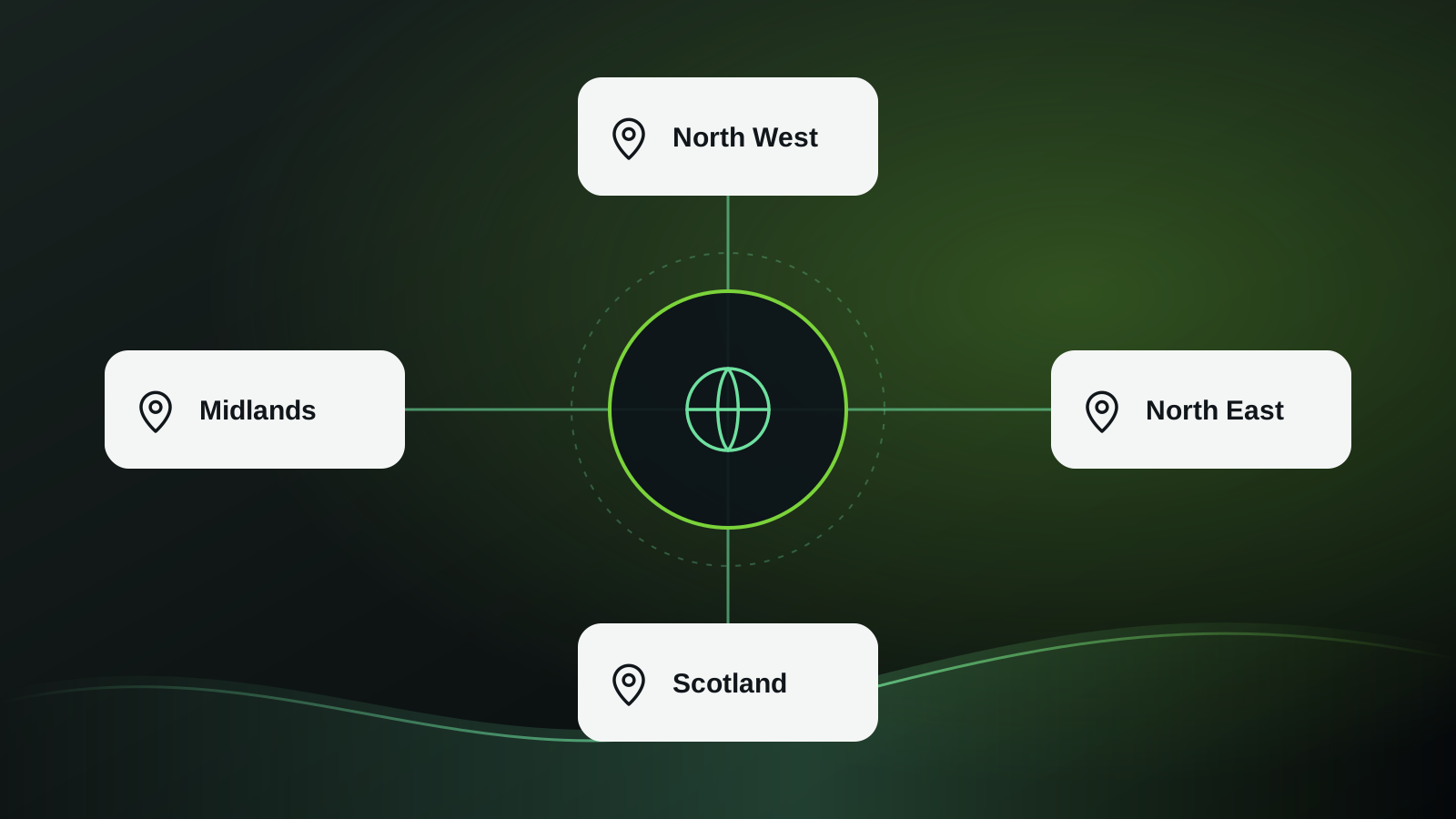
Track branded search volume, direct traffic, retailer sales and your own sales in the regions and weeks you spend. Compare them with a control: a period before the campaign, or regions that did not receive it. For example, a brand launching a TV campaign in the North West might hold back Yorkshire as a comparison region and compare branded search and sales between the two for twelve weeks.
For larger budgets, marketing mix modelling estimates how much each channel contributed, after allowing for seasonality, price and distribution. Google has released Meridian, an open-source marketing mix model that can be calibrated with geo experiments and that accounts for search query volume when estimating the effect of paid search (Google, 2025). Open tools lower the cost of entry, but the model is only as good as the data and the people running it. Marketing science methods make the comparison more reliable, and they show where the next pound should go.
Measure over the right time frame. With most of the profit arriving after 13 weeks in Thinkbox's data, a campaign judged at four weeks will look weaker than it is.
Build a measurement plan before the campaign starts
The most reliable lift studies are designed before any money is spent. Agree the outcome you will judge the campaign on, such as incremental sales, new customers or branded search, and the baseline you will compare against. Decide which regions or audiences will be held back, and for how long. Write it down, so the result cannot be reinterpreted afterwards to suit the story.
Then put the tracking in place. Make sure branded search, direct visits, retailer data and your own sales can be broken down by region and by week. Tag every paid link consistently. If retailers will share sell-out data by store or region, agree that in advance. Survey a sample of new customers about where they heard of the brand, which catches influence that digital tracking misses.
- Before: agree the outcome, baseline, control design and time frame.
- During: monitor delivery and early signals such as branded search, but do not judge the result yet.
- After: compare test and control over the agreed period, including the weeks after the campaign ends, and feed the result into the next plan.
Common mistakes, what good looks like and what to ask a supplier
The common mistakes are cutting brand spend because it does not show in last-click reports, running reach campaigns without branded search and retail ready to catch demand, judging results too early, and changing the creative so often that nothing builds memory. Another is measuring awareness without ever linking it to search and sales.
Good looks like a clear job for the brand, a balanced plan of reach and activation, a pre-agreed test design with control regions or periods, and a report that shows branded search, sales and profit over at least a full buying cycle.
Before you appoint a supplier, ask:
- How will you measure incremental sales, not just reach and clicks?
- What control regions or periods will we use, and for how long?
- How will you make sure search, retail listings and AI answers are ready to capture demand?
- How do you balance brand building and activation, and on what evidence?
Put this into practice
Book a discovery call and we will review your channels and results first, then agree what to test.
Plan your brand growthQuestions and answers
How long does brand growth take to show in sales?
It depends on the category and channels. Branded search and direct traffic often move first, and sales follow over weeks or months. In Thinkbox's 2024 UK study, 58% of advertising profit came after the first 13 weeks, so measure over a full buying cycle.
Should a brand spend on performance or brand media?
Usually both. Brand media creates future demand and performance media captures demand that already exists. IPA research by Binet and Field suggests a rough 60:40 split in favour of brand building on average, but the right mix depends on the category and how well known the brand is.
Is TV still worth it for consumer brands?
For many brands, yes, because it reaches large audiences quickly. Thinkbox's 2024 study found TV produced 54.7% of advertising's full profit payback from 43.6% of investment. That study was commissioned by the TV industry, so test it against your own results.
How do we know the campaign caused the sales lift?
Use a comparison. Hold back some regions or compare against a matched period, then compare branded search and sales between the two. For larger budgets, a marketing mix model calibrated with geo experiments gives a more reliable estimate of each channel's contribution.
Does AI search change brand building?
It adds a new place where buyers meet the brand. Shoppers increasingly ask AI tools for recommendations and read AI summaries of reviews. Make sure your product information, reviews and third-party coverage give AI tools an accurate picture to draw on.
References
- Thinkbox, "Profit Ability 2: the new business case for advertising", 2024
- B2B Institute and Ehrenberg-Bass Institute, "The 95:5 rule is the new 60:40 rule", 2021
- IPA, "The next chapter for The Long and The Short of It", 2023
- Ofcom, "From apps to AI search: how the UK goes online in 2025", 2025
- Pew Research Center, "Google users are less likely to click on links when an AI summary appears in the results", 2025
- Adobe, "Adobe Analytics: traffic to US retail websites from generative AI sources jumps 1,200 percent", 2025
- BrightLocal, "Local Consumer Review Survey 2026", 2026
- Google, "Meridian: open-source marketing mix model", 2025
 Alexander