What happens when a buyer asks an AI assistant about franchises
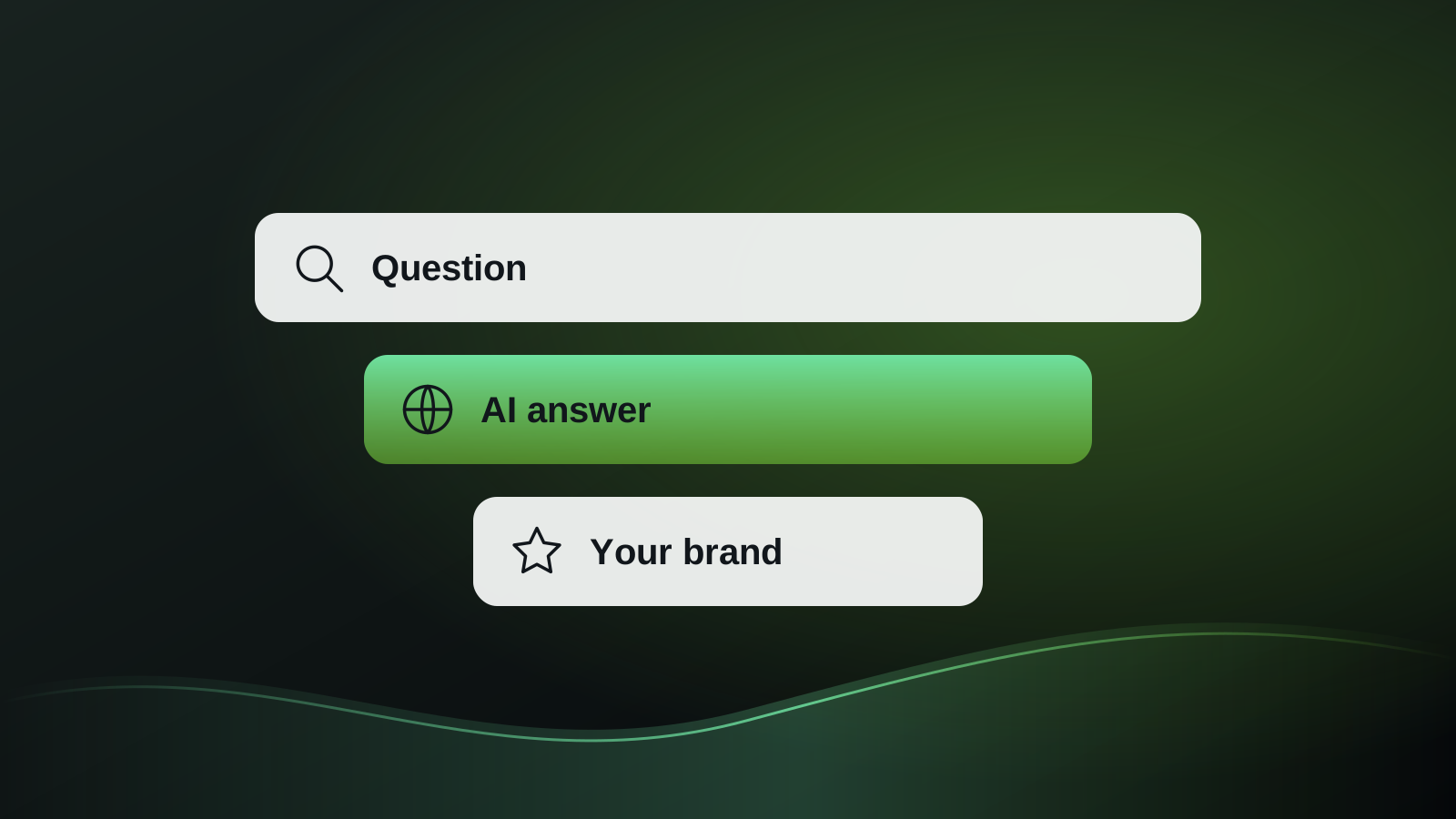
A prospective franchisee used to start with a search engine and a stack of directory pages. Many now start with a question typed or spoken into an AI assistant: "what is the best franchise to buy for under £50,000", "franchises near me that suit a career changer", or "is a cleaning franchise a good investment". The assistant does not return ten links. It returns a short written answer, often naming three to six brands, with a sentence or two on each and a handful of cited sources.
That short answer is a shortlist. A brand that is named, and described accurately, enters the buyer's comparison. A brand that is missing, or described with old fees and the wrong territories, may never get a discovery call. This is what generative engine optimisation (GEO) addresses: making sure the sources an assistant relies on describe your franchise as you would want it described, so that the assistant can repeat it.
The questions buyers ask fall into a few groups. There are category questions ("best home care franchises"), budget questions ("low cost franchises UK"), location questions ("franchises available in Leeds"), suitability questions ("franchise for someone with a sales background") and brand questions ("is [brand] a good franchise", "[brand] franchise fees"). Each group pulls on different sources, so each needs a different fix.
Why it matters now: the data on AI answers and clicks
AI answers are no longer a niche. Ofcom reports that Google Search is used by 82% of UK adults and handles around 3 billion searches a month, that about 30% of searches now show an AI overview, and that 53% of adults say they see these summaries often (Ofcom, 2025). The same report recorded 1.8 billion UK visits to ChatGPT in the first eight months of 2025, against 368 million in the same months of 2024.
The summary often replaces the click. Pew Research Center tracked the browsing of 900 US adults in March 2025 and found that people clicked a traditional search result on 8% of visits to a results page with an AI summary, against 15% when there was no summary; clicks on the links inside the summary happened on only about 1% of visits (Pew Research Center, 2025). It is a US sample, but the direction is clear. If the summary is where the buyer forms a view, the content of the summary matters more than your position in the links below it.
People also use assistants to choose between businesses. BrightLocal's 2026 survey of 1,002 US adults found that 45% had used AI tools for local business recommendations in the previous year, up from 6% a year earlier, and 31% had used ChatGPT for business recommendations (BrightLocal, 2026). The same survey found that 88% of AI users fact-check the sources, so the pages the assistant cites still get read. That is a US consumer survey rather than a study of franchise buyers, but franchise research follows the same habits.
The competition for those few named slots is real. The British Franchise Association's 2024 survey counted 1,009 franchise systems in the UK (Franchise Direct, 2024). An assistant naming five brands in a category leaves most systems out of the answer.
Which sources AI assistants draw on for franchise questions
Assistants that search the web build their answers from pages that already rank and are easy to quote. Google says its AI Overviews and AI Mode may use a "query fan-out" technique, running several related searches across subtopics to build a response, and that a page only needs to be indexed and eligible to show with a snippet to be used as a supporting link (Google Search Central, 2026). Google also says no special optimisation is required beyond normal search fundamentals. For franchise questions, the pages that tend to be retrieved fall into the five groups listed below.
The mix depends on the question. Budget and category prompts lean on directories and rankings; brand prompts lean on the franchisor's site, reviews and news; suitability prompts often pull in advice articles. A franchisor therefore needs to be present and accurate in each group, not only on its own website:
- Franchise directories and portals. Listings with investment levels, categories and territories are structured and easy to summarise, so they are often cited for budget and category questions.
- Trade press. Franchise and business titles carry features, rankings and news about expansion, and they lend a brand third-party credibility.
- Disclosure and official documents. In the US, franchisors must give buyers a Franchise Disclosure Document at least 14 days before signing or payment, and any earnings claims must sit in Item 19 (Federal Trade Commission, 2020). The UK has no equivalent statutory document, so the franchisor's own published terms and its trade association membership carry more weight.
- Reviews and forums. Franchisee reviews, Reddit threads and comment pages are drawn on for "is it a good franchise" questions. Pew found that Wikipedia, YouTube and Reddit together made up 15% of the sources cited in Google AI summaries in its sample (Pew Research Center, 2025).
- The franchisor's own site. Pages on investment, support, territories and franchisee stories are the primary source for brand questions, if they are clear enough to quote.
How a franchisor gets named accurately: a method to follow
The goal is not to trick the assistant. It is to make the accurate version of your franchise the easiest version to find and quote. The work sits across your website, your listings and your reputation, so it needs one owner who can coordinate marketing, franchise development and legal sign-off.
For example, a franchisor with 40 sites recruiting for 15 new territories might work through these steps over a quarter. On earnings, UK guidance says business opportunity claims should reflect what an average participant is likely to achieve and be backed by robust evidence (ASA, 2026):
- Write down the 20 to 30 questions buyers ask at each stage, from category and budget questions to brand checks, and run them in the main assistants to see who is named today.
- Publish one clear page for each core fact: total investment and what it includes, fees, support and training, territory availability, and the profile of a good franchisee. Put the key figure in the first paragraph, in plain words.
- Make the same facts match everywhere. Update every directory listing, your association profile and your own site so the investment range, number of sites and founding year agree.
- Earn trade press coverage built on facts an assistant can quote: network growth, franchisee profiles, new territories and expert comment. Digital PR is the usual route.
- Ask satisfied franchisees for honest reviews on the platforms that appear in assistant answers, and respond to criticism in public with facts.
- Keep earnings figures within the rules. Quote averages with the basis explained, never your best performer, and take legal advice first.
- Rerun the same questions monthly and log the changes.
How to measure AI visibility for a franchise
Measure presence, accuracy and sources, not rank. Answers vary from one run to the next, so run each question several times and record how often your brand is named, whether the description is correct, and which pages were cited. The share of runs in which you appear is a more stable number than any single answer. Our companion post on auditing what AI assistants say about your franchise network sets out a repeatable method.
Then connect it to recruitment. Add "AI assistant" as an option in the "how did you hear about us" question on the enquiry form and the first call, and track enquiries, discovery days and signed agreements by source. Google says traffic from AI Overviews and AI Mode is counted within the normal web search figures in Search Console (Google Search Central, 2026), so you will not see it separately there; the enquiry form is your best signal.
Common mistakes, and what good looks like
The most common mistake is inconsistency. A directory lists a 2021 fee, an old press release gives a different site count, and the franchisor's own page buries the investment in a PDF. An assistant faced with three versions may pick the wrong one or hedge. Accuracy is a real risk: an international study coordinated by the EBU and led by the BBC found that 45% of AI assistant answers about news had at least one significant issue, and 31% had serious sourcing problems (Advanced Television, 2025). That study covered news questions, not franchising, but it shows that assistants repeat whatever their sources say, errors included.
Other mistakes include chasing a single "rank" in one assistant, ignoring negative forum threads, writing pages that are all brand language and no facts, and making earnings claims that would not survive scrutiny.
Good looks like this: the brand is named in a fair share of answers to its category and budget questions; the description matches the current offer; the cited sources are pages the franchisor controls or trusts; and buyers who arrive via an assistant already understand the investment and the model. For a wider look at why brands go missing from these answers, see why brands are invisible to AI assistants.
What to ask a supplier
If you bring in an agency for AI visibility, ask how many times they run each prompt and across which assistants, and whether they report the share of runs in which you appear rather than a position. Ask how they record accuracy, not just mentions, and how they trace a wrong answer back to the source that caused it.
Ask what they will change, and where: your site, directory listings, press coverage or reviews. Ask how they will link the work to enquiries and signed franchisees, and how they will keep any earnings or investment claims within advertising rules. A supplier who promises a guaranteed number one spot in ChatGPT is describing something that does not exist.
Put this into practice
Book a discovery call and we will review your channels and results first, then agree what to test.
Check how AI assistants describe your franchiseQuestions and answers
Can a franchisor pay to appear in AI assistant answers?
Not in the organic answer. Assistants build their answers from public sources such as directories, trade press, reviews and the franchisor's own pages. A franchisor improves its chances by making those sources accurate, consistent and easy to quote.
Which AI assistants matter most for franchise buyers?
Google's AI Overviews and AI Mode reach the most people because they appear in normal search, and ChatGPT use has grown fast. Check each major assistant, because they draw on different sources and name different brands.
Why does an AI assistant describe our franchise wrongly?
Usually because an outdated or conflicting source says so: an old directory listing, a past press article or a forum thread. Find the cited source, correct it or publish a clearer one, and recheck the answer over the following weeks.
Do franchise directories still matter if buyers use AI?
Yes. Directory listings are structured and easy to summarise, so assistants often cite them for budget and category questions. Keep your listings current, with the same investment range and site count as your own website.
How long does it take to change what AI assistants say?
Assistants that search the web can pick up corrected pages within weeks once they are indexed. Changes that depend on new press coverage or reviews take longer. Rerun the same questions monthly to see the effect.
References
- Ofcom, "From apps to AI search: how the UK goes online in 2025" (Online Nation 2025), 2025
- Pew Research Center, "Google users are less likely to click on links when an AI summary appears in the results", 2025
- BrightLocal, "Nearly half of consumers are asking AI for business recommendations" (Local Consumer Review Survey 2026), 2026
- Franchise Direct, "The results are out: the BFA and NIC Services Group reveal the results of the 2024 National Franchise Survey", 2024
- Google Search Central, "AI features and your website", 2026
- Federal Trade Commission, "A consumer's guide to buying a franchise", 2020
- Advanced Television, "Study: AI misrepresents news content 45% of the time" (EBU and BBC study), 2025
- ASA, "Recruitment and business opportunities: earnings claims" (CAP AdviceOnline), 2026

 Alexander