What "one listing per site" means
Google's rules are clear on the basics. Each physical location should have one Business Profile, whether it is managed from one account or several, and duplicate profiles can cause display problems in Maps and Search. Locations in a chain should use a consistent name and the same primary category, and an authorised franchisee may use the brand name in its profile (Google, 2026). A virtual office or a mailbox address is not eligible.
The local page is the other half. Each site should have its own page on the brand website, with the address, opening hours, phone number, services offered at that site, local reviews and something genuinely specific: the team, the area served, parking, nearby landmarks. A page that only swaps the town name in a template gives search engines and AI assistants nothing to work with.
The listing and the page should agree with each other. If the profile says the site opens at 8am and the page says 9am, both lose credibility. Consistency across the brand site, Google, Apple Maps, Bing and the main directories is the foundation everything else rests on.
Why it matters for franchise networks
Franchising is a large, local business in the UK. The British Franchise Association's 2024 survey with NIC Services Group counted 1,009 franchise systems and 50,421 franchised units, contributing about £19.1 billion to the economy, with 89% of units reported as profitable (Franchise Info, 2024, reporting the bfa survey). Almost every one of those units depends on being found by people nearby.
How people find local businesses is changing quickly. BrightLocal's 2026 survey of 1,002 US consumers found that use of ChatGPT and other generative AI tools for local recommendations rose from 6% to 45% in a year. Google's share of review reading fell from 83% to 71%, while Apple Maps rose from 14% to 27% (BrightLocal, 2026). It is a US sample, but it shows that one platform is no longer enough.
In the UK, Ofcom reported 1.8 billion visits to ChatGPT in the first eight months of 2025, up from 368 million a year earlier, and about 30% of searches now show AI overviews (Ofcom, 2025). For a franchise network, that means a growing share of "which one near me?" decisions are made in an answer, not a list of links.
How AI assistants choose local businesses (GEO)
Generative engine optimisation, or GEO, is the work of making a business easy for AI assistants to understand, trust and recommend. For local businesses, the bar is high. SOCi's 2026 Local Visibility Index, which analysed more than 350,000 locations across 2,751 multi-location brands, found that locations appeared in Google's local 3-pack 35.9% of the time on average, but ChatGPT recommended only 1.2% of them. Recommended locations averaged a 4.3-star rating, and in retail only 45% of the most visible brands in local search overlapped with those AI recommended most (SOCi, 2026). This is a vendor study of US-weighted brands, but the direction is clear.
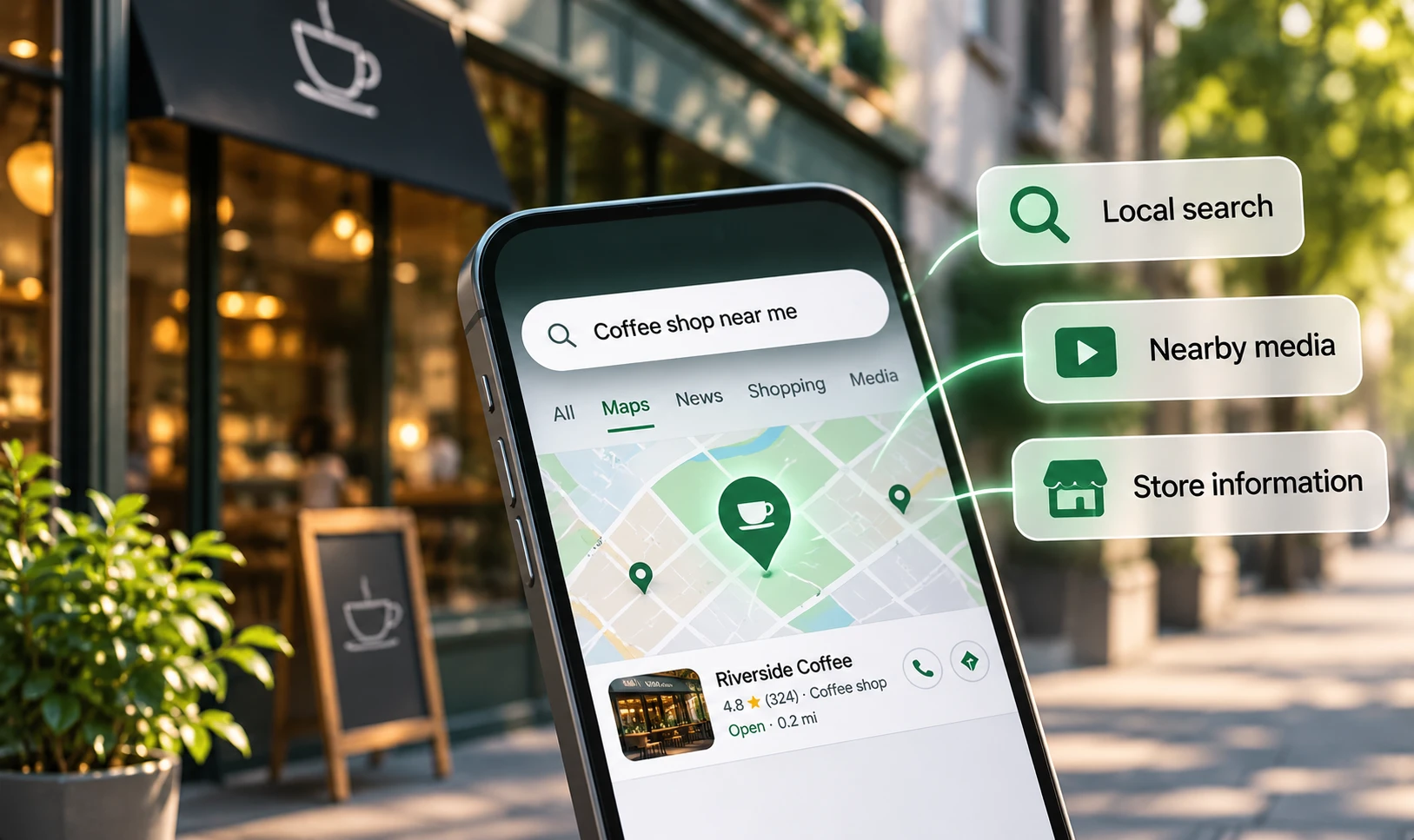
AI assistants do not rely on Google Business Profiles alone. Near Media's report on the same study noted that the most common sources behind local AI answers were Google Maps, niche directories, brand websites, Yelp and Facebook (Near Media, 2026, reporting SOCi). That spread is why the local page, third-party listings and reviews all matter as much as the profile.
In practice, assistants tend to recommend sites where the facts are complete and consistent everywhere, reviews are recent and positive, and the brand website explains clearly what that specific site offers. For more on the difference between ranking and being recommended, see why SEO and GEO need two plans.
Who controls each listing
Control is the question most franchise networks get wrong. If franchisees create and own their own profiles, the brand loses consistency and, when a franchisee leaves, may lose the listing and its reviews. If the franchisor controls everything centrally, local details go stale because head office does not know about the new opening hours or the temporary closure.
The model that usually works is shared control with clear roles. The franchisor owns the account and the brand standards: name format, categories, photos, page template and review policy. The franchisee is added as a manager of their own location, with permission to update hours, post local news and reply to reviews within agreed guidelines. Write this into the operations manual and, ideally, the franchise agreement, so ownership is settled before a dispute arises.
- Franchisor owns: the Business Profile account, brand name format, primary category, page template, photo standards and review response policy.
- Franchisee manages: opening hours, holiday closures, local posts, local photos and first responses to reviews.
- Shared: the local page content, local offers and any service-area settings.
- On exit: the listing, its reviews and its page stay with the brand and pass to the next franchisee.
A method you can follow
For example, a franchisor with 40 sites might audit every listing in the first month, fix duplicates and inconsistencies in the second, publish proper local pages in the third, and then move to a monthly routine. The steps below follow that order.
The order matters because fixing duplicates and wrong facts first stops you building new content on a broken base. If you are also recruiting new franchisees, the same local pages can support that work; see recruiting franchisees before they search.
- Audit every site: find each profile, check ownership, and list duplicates, wrong addresses, wrong hours and missing categories.
- Claim and merge: bring every profile under the brand account, remove duplicates and verify any unverified sites.
- Standardise: apply one name format, one primary category and consistent hours, phone and website links.
- Build local pages: one per site, with specific detail, local reviews and structured data for the address and hours.
- Spread consistency: update Apple Maps, Bing and the main directories with the same facts.
- Set a review routine: ask every satisfied customer, and reply to every review within a set time.
Measuring enquiries and visits per site
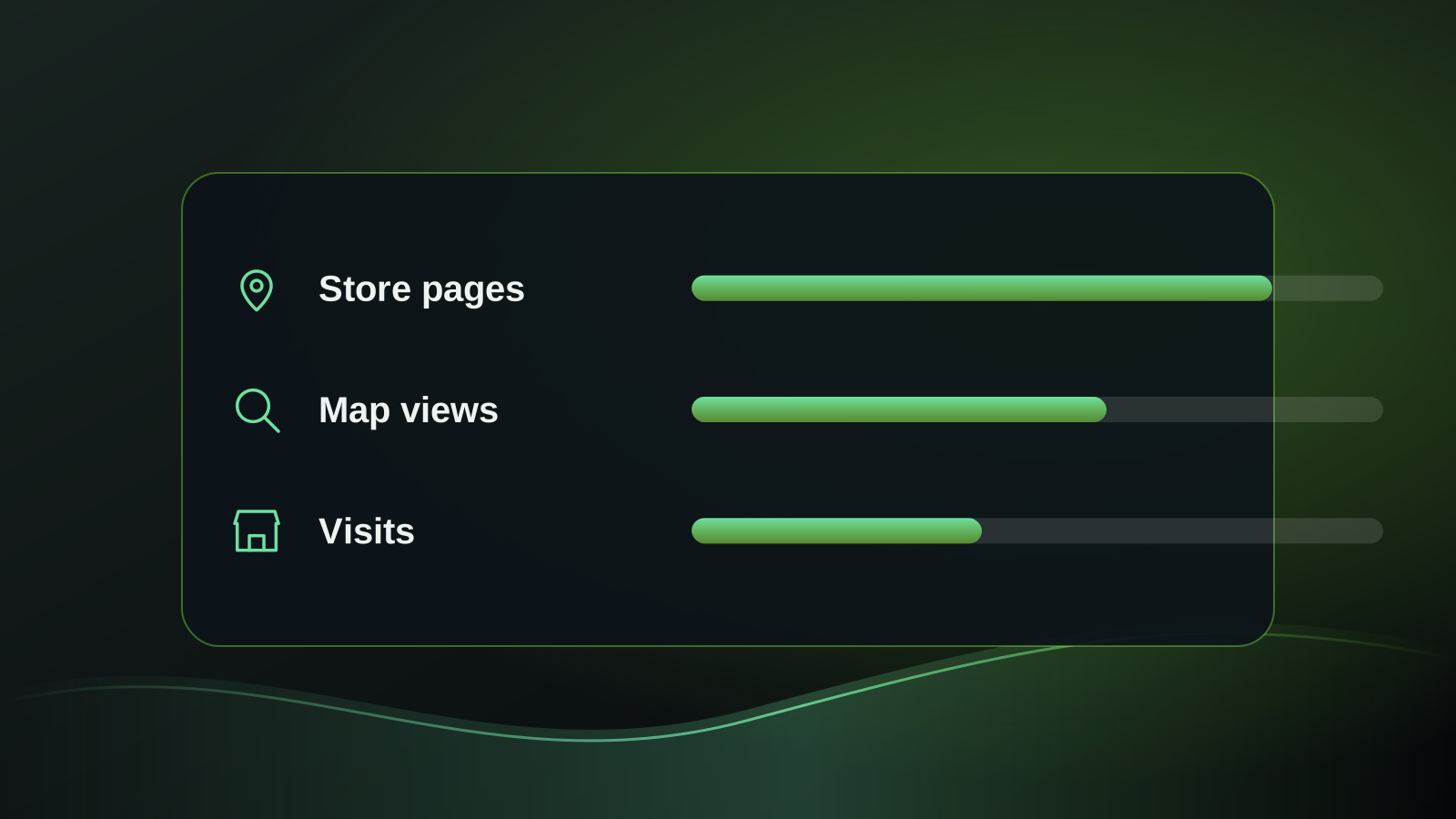
Measure each site separately, then roll up. Google Business Profile reports calls from the call button, direction requests, website clicks, bookings where a provider is connected, and the search terms that led to the profile. Google notes that views count a person once a day and that direction counts exclude repeat taps and cancellations (Google, 2026). These are useful trends, though they will not match your phone system exactly.
Add a tracked link from each profile to its local page, so website visits and enquiries can be attributed to the site. Where possible, connect these to what the franchisee records: bookings, enquiries, sales. For AI visibility, run a fixed set of local questions in the main assistants each month, such as "best [service] in [town]", and record whether each site is named. Track the share of sites recommended over time rather than single answers, which vary.
Report site by site. A league table of calls, direction requests, enquiries, reviews and AI mentions per site shows franchisees where they stand and gives head office a fair basis for support.
Common mistakes, what good looks like, and supplier questions
Common mistakes include franchisees creating their own duplicate profiles, template local pages with no real detail, inconsistent names such as "Brand Leeds" on one platform and "Brand - Leeds City Centre" on another, unanswered reviews, and listings lost when a franchisee leaves. Another is measuring only the network total, which hides the sites that are invisible.
Good looks like one verified profile and one useful page per site, the same facts everywhere, recent reviews with replies, clear ownership written into the agreement, and a monthly report that shows each site's calls, directions, enquiries and AI mentions. Our franchising, SEO and GEO pages explain how this fits a wider plan.
- Who will own the Business Profile account, and what access will franchisees have?
- How will you find and remove duplicate listings across the network?
- What will each local page contain beyond the address and a town name?
- How will you measure whether AI assistants recommend each site?
- What will you report per site each month, and how will franchisees see it?
Put this into practice
Book a discovery call and we will review your channels and results first, then agree what to test.
Talk about your franchise networkQuestions and answers
Should each franchise location have its own Google Business Profile?
Yes. Google expects one profile for each physical location, with a consistent brand name and primary category across the chain. Duplicate profiles for the same site can cause display problems, and virtual offices or mailbox addresses are not eligible, so each real site should have exactly one verified profile.
Who should own a franchisee's Google Business Profile?
In most networks, the franchisor should own the account and set brand standards, while each franchisee is added as a manager for their own location. That keeps listings and reviews with the brand when a franchisee leaves, while letting local teams keep hours and posts up to date.
How do AI assistants decide which local business to recommend?
They draw on several sources, including maps data, brand websites, directories and review sites. A 2026 SOCi study found ChatGPT recommended only about 1.2% of the locations it analysed. Sites with complete, consistent information and strong recent reviews are more likely to be named.
What should a franchise local page include?
A local page should include the site's address, opening hours, phone number, the services offered at that site, local reviews and genuinely specific detail such as the team, the area served, parking and nearby landmarks. A template that only swaps the town name gives search engines and AI little to use.
How do I measure local search results for each franchise site?
Use Business Profile data for calls, direction requests and website clicks, add tracked links to each local page, and connect enquiries to what the franchisee records. Check a fixed set of local questions in AI assistants monthly, and report results site by site rather than only as a network total.
References
- Google, "Guidelines for representing your business on Google", 2026
- Google, "Understand your Business Profile performance and insights", 2026
- Franchise Info, "The results are out: the BFA and NIC Services Group reveals the results of the 2024 National Franchise Survey", 2024
- BrightLocal, "Local Consumer Review Survey 2026", 2026
- Ofcom, "From apps to AI search: how the UK goes online in 2025", 2025
- SOCi, "In AI-driven discovery, few brands are chosen, most disappear", 2026
- Near Media, "Local AI study, AI Mode onramp, G-queries down, squandered tech trust", 2026
- Google, "About shop visit conversions", 2026
 Alexander