What local SEO means for a multi-store brand
A single shop does local SEO for one place. A consumer brand with ten or a hundred stores has to do it for every catchment at once, while keeping the brand consistent. The work splits into two connected systems: the website, where a store locator and store pages live, and the map platforms, where each store has a profile on Google, Apple Maps and elsewhere.
Google says local results are mainly decided by relevance, distance and prominence, and that prominence draws on links, reviews and ratings as well as how well known a business is (Google Business Profile Help, 2026). Distance you cannot change. Relevance and prominence you can, store by store.
Why it matters: how shoppers use maps and local search
Map apps are part of daily life. Ofcom's Online Nation report lists Google Maps among the three most used apps by UK adults (Ofcom, 2025). And people check reviews before they choose: BrightLocal's 2026 survey of 1,002 US consumers found that 97% read reviews for local businesses, and 41% always do, up from 29% the year before (BrightLocal, 2026).
The sources people use are spreading out. In the same survey, 71% used Google to read reviews, down from 83%, while Apple Maps rose from 14% to 27% and AI tools such as ChatGPT rose from 6% to 45% (BrightLocal, 2026). Standards are rising too: 68% said they would only use a business rated four stars or more, up from 55%, and 74% look for reviews from the last three months. These are US figures, but the direction is clear for UK brands: one Google listing is no longer enough, and old reviews count for less.
Experts also rank what matters. Whitespark's 2026 Local Search Ranking Factors survey of 47 local search specialists placed the primary Business Profile category, proximity to the searcher and the business being open at the time of search among the top factors for map results, and a dedicated page for each service, local relevance of content and the quality of inbound links at the top for local organic results (Whitespark, 2025). This is expert opinion rather than measured data, but it is a useful checklist.
Build a store locator that search engines and shoppers can use
The store locator is the hub. It should be crawlable without running a search box, so link to every region and every store page in plain HTML. Each store page should have its own address, phone number, opening hours, a map, directions, parking, services and the ranges stocked there, written for that shop rather than copied with the town name swapped.
Mark up each page with structured data. Google's documentation describes LocalBusiness markup, which needs a name and address and recommends opening hours, coordinates, telephone and a URL for the specific location; departments such as an in-store pharmacy or café can be nested with their own hours (Google Search Central, 2026). Mark up each location as its own entity.
- A crawlable locator with links to every region and store, not only a search box.
- One page per store, with unique facts: landmarks, parking, accessibility, team, services and events.
- Opening hours that match the Business Profile exactly, including seasonal changes.
- Structured data on every store page, tested with Google's tools.
- Links from each store page to nearby stores, so customers and crawlers can move between them.
A profile for every store, and reviews that stay fresh
Each store needs its own verified Business Profile, linked to its own store page, with the same name the shop uses on its sign, the most specific primary category, accurate hours and real photos. Google's guidelines say chain locations in one country should share one name and one main category, and forbid adding locations or keywords to the name (Google Business Profile Help, 2026). Expert surveys rank keywords in the business name highly, but adding them breaks the guidelines and risks suspension, so do not do it.
Manage the profiles centrally. Brands with ten or more locations of the same business can apply for bulk verification in Business Profile Manager, using a spreadsheet of every profile they manage, and Google may remove verification from accounts that stop maintaining their profiles (Google Business Profile Help, 2026). Keep all stores in one business group account, give regional managers access rather than ownership, and agree who updates hours, photos and events for each shop. A named owner for every store, and a monthly check of every listing, stops the slow drift that leaves branches showing old hours or a former manager's phone number.
Then claim and maintain listings on Apple Maps through Apple Business Connect, and on Bing Places, since shoppers increasingly use them. Build reviews into store routines: ask at the till or by receipt, reply to every review, and track ratings by store so weak branches get attention. Our guide to Business Profiles for retail chains covers profile management in more detail.
Local links and local content
Prominence comes partly from links. For a multi-store brand, the most useful links are local ones: a store sponsoring a junior football team, hosting a charity event, joining a town centre business group or being featured by local press when it opens. Each one links to that store's page, not the home page.
Local content gives store pages substance. Short news about events, staff who have won awards, guides to the area or seasonal ranges chosen for that shop all help a page stand out from a template. For example, a hypothetical outdoor clothing brand with 20 stores might give each store page a short guide to nearby walking routes, written by staff, and link it from local walking clubs. That is relevant, local and hard to copy.
Measuring local visibility and store visits
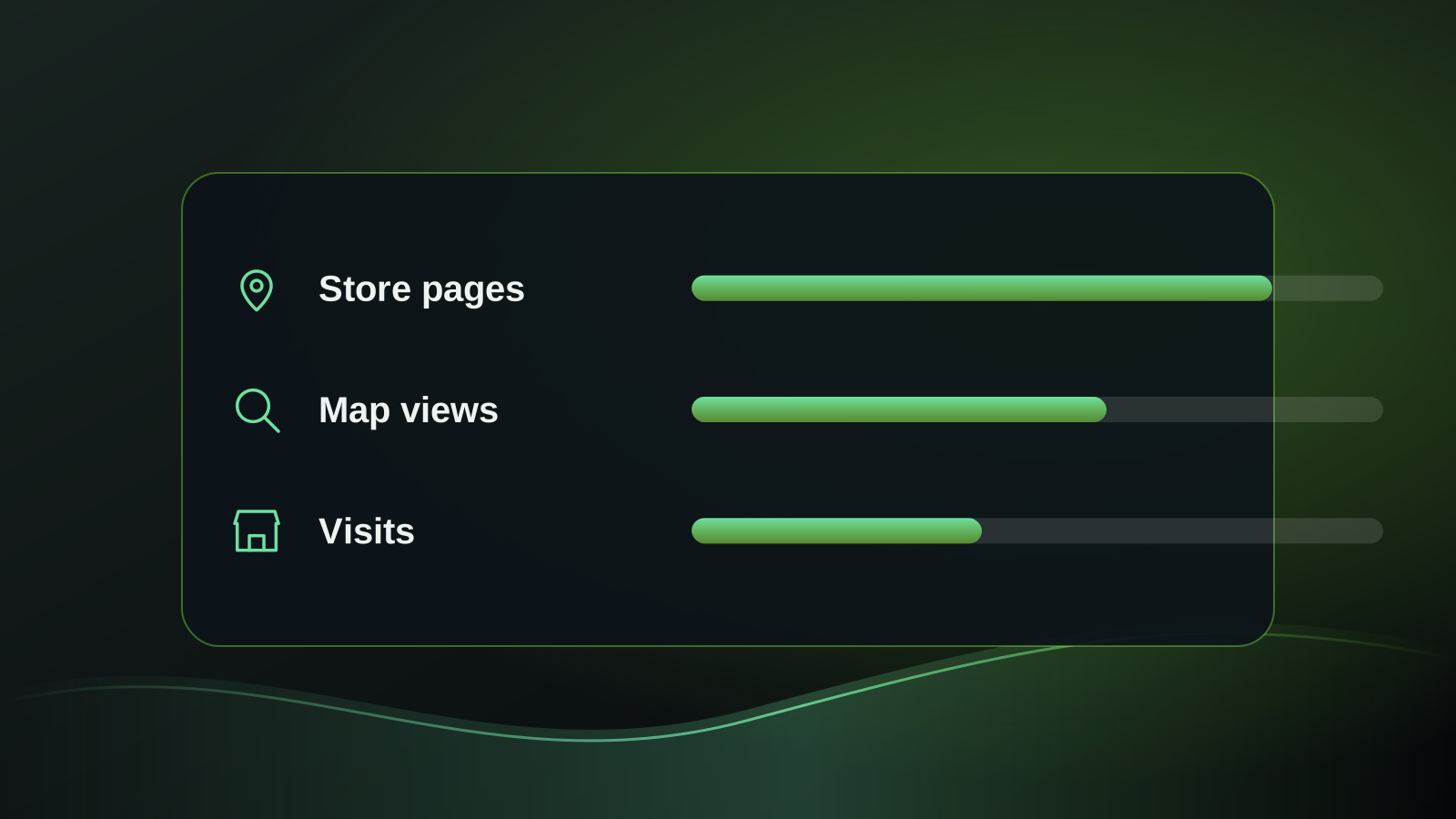
Measure each store separately. A brand average hides the branches that are invisible in their own town. Track map rankings for important searches using a grid of points around each store, not a single location, since results vary by where the searcher stands. Track Business Profile actions: Google reports views, searches, direction requests, calls and website clicks per location, and the figures include both organic results and Google Ads (Google Business Profile Help, 2026).
On the website, track organic visits to each store page and the actions taken there: directions, calls and click and collect. Then compare stores. Branches with strong visibility and weak sales may have a store problem; branches with strong sales and weak visibility are an opportunity. Our SEO service sets up this reporting.
- Map rankings across a grid around each store, for priority searches.
- Business Profile views, direction requests, calls and website clicks per store.
- Organic visits and actions on each store page.
- Average rating, number of reviews and reviews in the last three months, per store.
- Store sales and footfall alongside the search data.
Common mistakes, what good looks like, and what to ask
The usual mistakes: store pages that only change the town name, a locator that hides every page behind a search box, hours on the website that disagree with the map listing, keywords stuffed into profile names, reviews ignored at weaker branches, and links pointed at the home page rather than the store. Good looks like a crawlable locator, a unique page and a verified profile for every store, hours that match everywhere, reviews answered within days, local links to store pages, and a monthly report by store.
When choosing a supplier, ask how they will build and maintain unique content for every store page, how they will keep hours and details consistent across Google, Apple and Bing, how they will measure rankings across each catchment rather than from one point, and how they will connect search data to store sales.
Put this into practice
Book a discovery call and we will review your channels and results first, then agree what to test.
Review local search across your storesQuestions and answers
Do we need a separate web page for every store?
Yes. A dedicated page for each store, linked from a crawlable locator, gives search engines and shoppers the address, hours, directions and services for that shop. Expert surveys rank dedicated, locally relevant pages among the strongest local organic factors.
Should we add the town name to our Google Business Profile name?
No. Google's guidelines say chain locations in one country should share the same name as on their signs, without added locations or keywords. Breaking that rule risks suspension. Put local detail on the store page and in the profile's other fields instead.
Is Apple Maps worth managing as well as Google?
Yes. BrightLocal's 2026 survey of US consumers found Apple Maps use for reading reviews rose from 14% to 27% in a year. Claim each store through Apple Business Connect and keep its details consistent with Google.
How do reviews affect store visits?
They shape both ranking and choice. Google counts reviews and ratings towards prominence, and BrightLocal's 2026 US survey found 68% of consumers would only use a business rated four stars or more, with 74% looking for reviews from the last three months.
How should we measure local SEO across many stores?
Measure each store, not a brand average. Track map rankings across a grid around every store, Business Profile direction requests, calls and website clicks, organic visits to each store page, and review ratings, then compare them with store sales.
References
- BrightLocal, "Local Consumer Review Survey 2026", 2026
- Whitespark, "Local Search Ranking Factors 2026", 2025
- Google Business Profile Help, "Tips to improve your local ranking on Google", 2026
- Google Business Profile Help, "Guidelines for representing your business on Google", 2026
- Google Business Profile Help, "Understand your Business Profile performance and insights", 2026
- Google Search Central, "Local business (LocalBusiness) structured data", 2026
- Ofcom, "From apps to AI search: how the UK goes online in 2025" (Online Nation 2025), 2025
- Google Business Profile Help, "Verify your business in bulk", 2026
 Alexander