Why physical stores still carry most of the sales
It is easy to assume that retail has moved online. The figures say otherwise. The Office for National Statistics reports that internet sales made up 28.8% of total retail sales in Great Britain in September 2026 (ONS, 2026). Even allowing for seasonal peaks, roughly seven in every ten pounds spent in retail are still spent away from websites, and most of that is spent in stores.
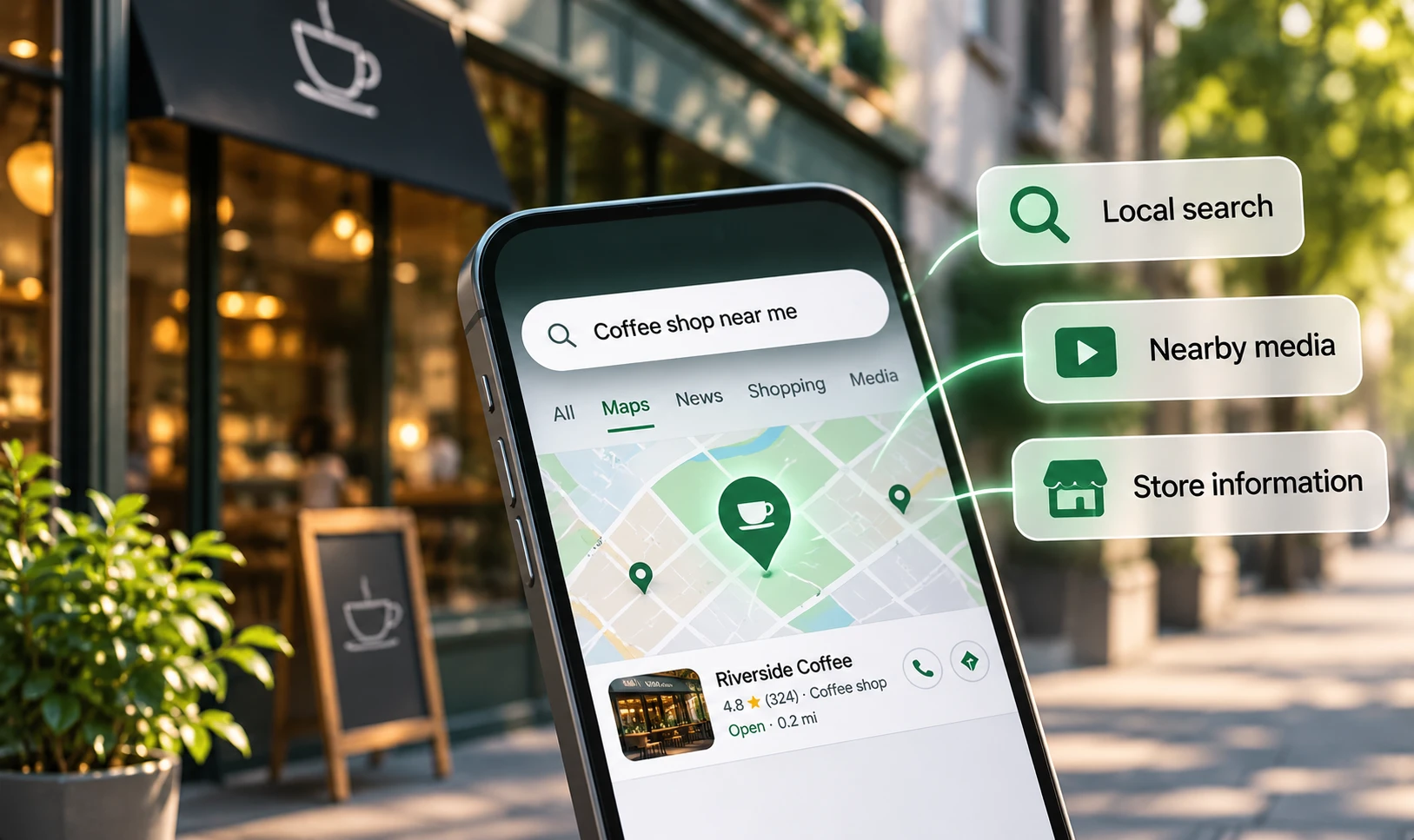
What has changed is how people decide where to go. A shopper who wants something today usually checks a phone first: which branch is nearest, whether it is open, whether it stocks the item and what other customers think. Ofcom's Online Nation report found that Google Search is used by 82% of UK adults and that about 30% of searches now show an AI overview (Ofcom, 2025). For a store, that means the decision to visit is often made on a search results page or a map, before the customer has seen the shop window.
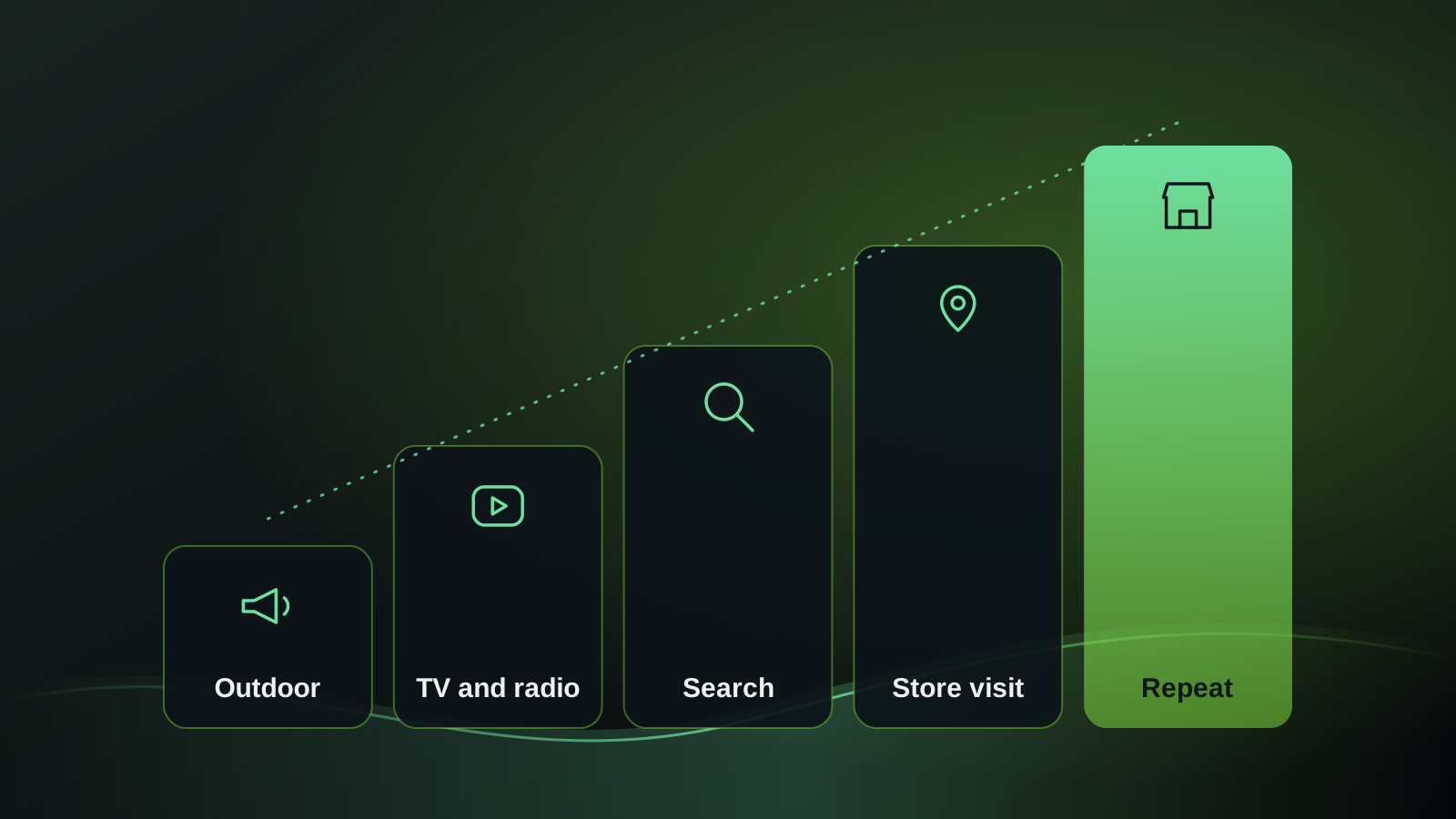
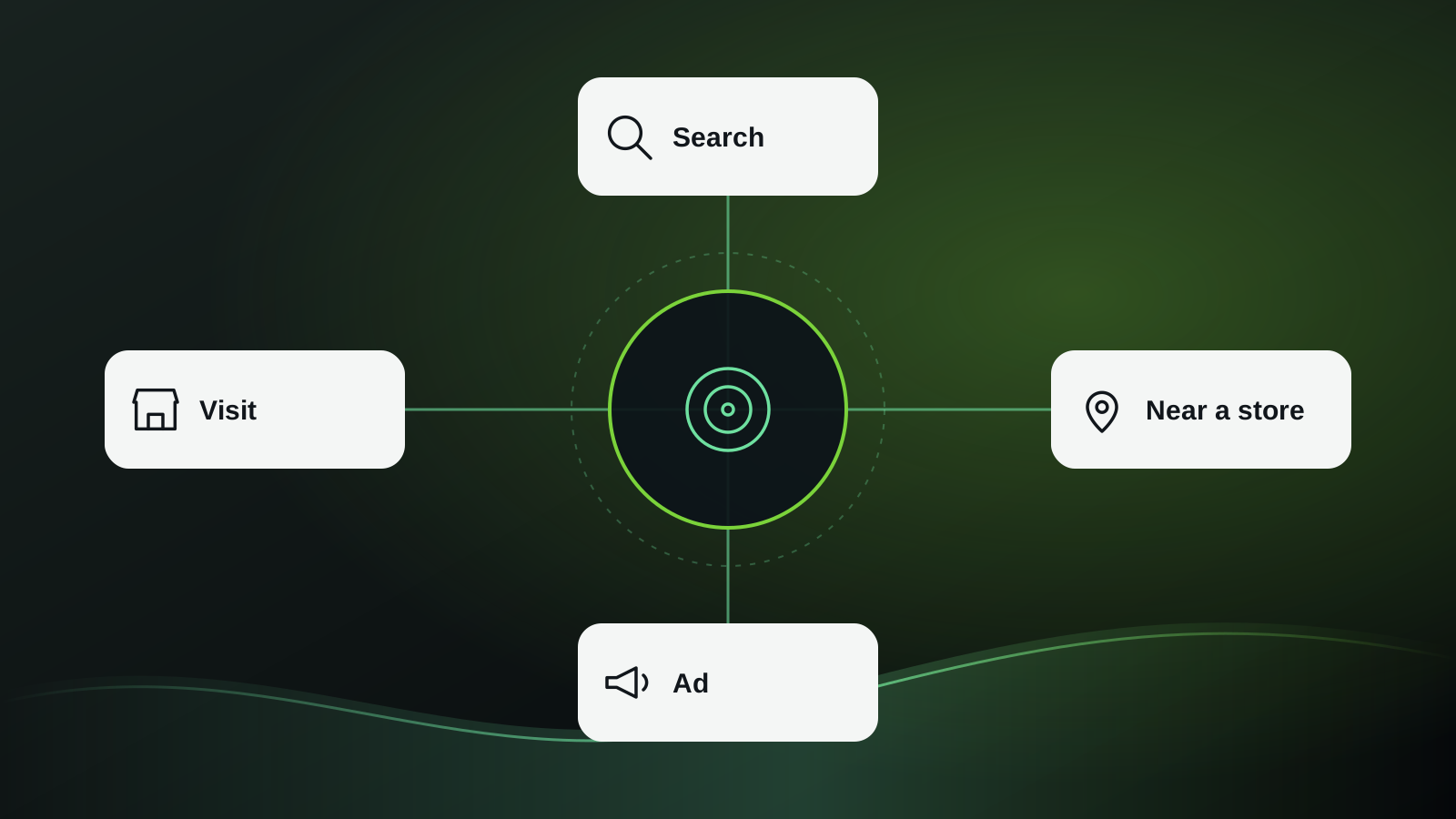
So footfall depends on two things working together: being easy to find and judge online at the moment of intent, and being familiar enough, through local media, that people think of the brand before they search.
Make each store easy to find online
Most local visits start with a map search. Make sure every location has an accurate Google Business Profile, with the correct address, opening hours, category and photos, and keep it up to date for seasonal changes. Google's guidelines are specific: use the name customers see on your signage without added keywords, give a precise real-world address, keep one profile per location, choose the fewest and most specific categories, and set special hours for holidays and temporary closures (Google Business Profile Help, 2026). Chains should use the same name across all locations in a country.
Reviews matter, but the way people use them is shifting. BrightLocal's 2025 survey of 1,026 US consumers found that only 4% never read online business reviews, and that 48% read a review summary before reading individual reviews (BrightLocal, 2025). It also found that 42% trust reviews as much as personal recommendations, down from 79% in 2020, and that more than three quarters watch video when researching local businesses. That is a US sample, so treat it as a guide to direction rather than a UK measure. The practical point holds: ask customers for reviews, reply to them, and add photos and short videos to each listing.
Use search to capture local intent
People searching "near me" or "in [town]" are close to a decision. Give each store a page that describes it clearly, with directions, parking, range, services and opening hours. Pages that only swap the town name into a template rarely help; a page that mentions the nearest landmark, the parking arrangements and what that branch is known for gives search engines and shoppers something real.
Paid local search adds reach where organic visibility is weak, or at moments that matter, such as the launch of a new store or a seasonal promotion. Location assets link the ads to your verified store listings. Our store visits service covers how these pages sit alongside paid local search.
AI tools increasingly answer local questions too. They draw on listings, store pages and reviews, so the same accuracy work that helps a map search helps an AI summary describe the right branch, with the right hours.
Use media to create demand nearby
Outdoor, radio and video can build awareness in the areas around a store, so people know the brand before they search for it. These channels still reach very large audiences. Outsmart reported that UK out-of-home advertising revenue reached a record £1.44 billion in 2025, up 2.6% year on year, in figures compiled by PwC (Digital Signage Pulse, 2026). RAJAR data for the second quarter of 2026 showed radio reaching a record 51 million UK adults each week, with commercial radio reaching 40.2 million (The Media Leader, 2026).
Timing and geography matter more than volume. Schedule media around promotions and store openings, and use OOH, TV and radio planning to target the catchment that each store really serves. A roadside poster on the main route into a retail park, or a radio burst in the week before a sale, is more useful than a national campaign that spends most of its budget far from any branch.
Measure visits, not just clicks
Clicks and calls are easy to track. Visits take more work. Google Ads offers store visit conversions on Search, Display and YouTube, but they are modelled from anonymised, aggregated data rather than counted one by one, and they require verified store locations, active location assets and enough clicks, impressions and foot traffic to meet privacy thresholds that vary by advertiser (Google Ads Help, 2026). Smaller chains often do not qualify, and even large ones should treat the figures as estimates.
A stronger test is a controlled comparison. Google's Conversion Lift tool compares a group shown the ads with a group held back, so that the difference reflects what the advertising caused rather than what it was credited with (Google Ads Help, 2026). For media that platforms cannot measure, such as posters or radio, the same logic works by area: run the activity in some catchments and not in comparable ones, then compare store sales, branded search and calls.
Practical measures for most retailers include:
- Sales by store, compared before, during and after each media burst, against stores that did not receive it.
- Branded search volume by location, which often rises when local media is working.
- Direction requests, calls and website clicks from each store listing.
- Call tracking numbers on local pages and ads, so phone enquiries can be attributed.
- Promotion codes or offers that are specific to a channel or a catchment.
A simple plan for a multi-site network
The three sources of visits, search, local media and offers, work best when they are planned together rather than by separate teams. For example, a regional chain of twelve garden centres preparing for spring might work through the following steps over a quarter:
- Audit every listing and store page in January, fixing names, hours, categories and photos, and removing duplicates.
- Rank the twelve catchments by sales potential, and choose four for a media test and four comparable ones as a control.
- Run outdoor and radio in the four test catchments for six weeks before Easter, with a store-specific offer.
- Run paid local search in all twelve, so the comparison isolates the effect of the media.
- Compare sales, branded search, direction requests and offer redemptions between test and control stores.
- Use the results to set the media plan for summer, and repeat the test with a different mix.
Common mistakes, and what good looks like
The most common mistakes are simple. Opening hours left unchanged over a bank holiday, a closed branch still showing on maps, duplicate listings for the same store, store pages with no unique content, and media planned nationally when only a handful of catchments matter. Each one costs visits that were already close to happening.
A single national page will not win a local search. In a chain or a franchise network, each site needs its own accurate page and listing, managed on a schedule, with a named person responsible for each. Good looks like this: every listing verified and current, every store page specific, reviews answered within days, media planned by catchment, and a quarterly report that compares stores that received activity with those that did not.
When you choose a supplier, ask how they will keep listings accurate across every location, how they will measure visits for channels that platforms cannot track, and whether they will use a control group or comparable areas rather than relying on modelled figures alone.
Put this into practice
Book a discovery call and we will review your channels and results first, then agree what to test.
Plan your store visitsQuestions and answers
Can a small chain measure store visits?
Yes. Start with call tracking, branded search by location and promotion codes. Add platform store visit measurement once you have enough locations and volume, since Google's store visit data only appears when privacy thresholds are met.
Do we need a separate website page for every store?
A dedicated, accurate page for each location helps people find you and helps AI tools describe you correctly. Keep the pages short, specific and current, with directions, parking, services and opening hours.
How accurate are Google store visit conversions?
They are modelled estimates based on anonymised, aggregated data, not a direct count. They are useful for comparing campaigns, but a controlled test with a held-back group or comparable areas gives a more reliable view of what advertising caused.
Is outdoor and radio advertising still worth it for local stores?
It can be, if it is planned around the catchments your stores serve. UK out-of-home revenue reached a record £1.44 billion in 2025, and radio reached a record 51 million adults a week in mid-2026, so both still offer wide local reach.
How often should we check our store listings?
Check them at least monthly, and before every bank holiday, seasonal change or store event. Set special hours in advance, remove listings for closed branches and look for duplicates, since each error can send customers to a closed door.
References
- ONS, "Internet sales as a percentage of total retail sales (ratio) (%)", time series J4MC, 2026
- Ofcom, "From apps to AI search: how the UK goes online in 2025" (Online Nation 2025), 2025
- Google Business Profile Help, "Guidelines for representing your business on Google", 2026
- BrightLocal, "Local Consumer Review Survey 2025", 2025
- Digital Signage Pulse, "UK's OOH ad industry reports highest ever annual revenue of £1.44bn in 2025 (Outsmart)", 2026
- The Media Leader, "Rajar Q2 2026: top takeaways", 2026
- Google Ads Help, "About shop visit conversions", 2026
- Google Ads Help, "Understand your Conversion Lift based on users measurement data", 2026
 Alexander