Why video suits franchise networks
A franchise brand has two jobs at once. It must be one recognisable brand nationally, and it must feel local and trustworthy in every territory. Video can do both, because a single brand film can be seen across the country while short local videos show the real people, vans, venues and customers in each area.
The sector is large and fragmented. The 2024 National Franchise Survey by the British Franchise Association and NIC Services Group counted 1,009 franchise systems and 50,421 franchise units in the UK, contributing £19.1 billion to the economy (Franchise World, 2024). Many of those units are small businesses that could never fund brand video on their own, which is exactly why a network approach works.
The audience is there. Ofcom's Online Nation 2025 report found that 94% of UK adults use YouTube, spending an average of 51 minutes a day on it, not counting viewing on a TV set (Ofcom, 2025). Ofcom's Media Nations report shows YouTube moving onto the living-room screen, with over-55s doing 42% of their YouTube viewing on TV sets in 2024, up from 33% the year before (Ofcom, 2025). For franchises that serve families and older homeowners, that matters.
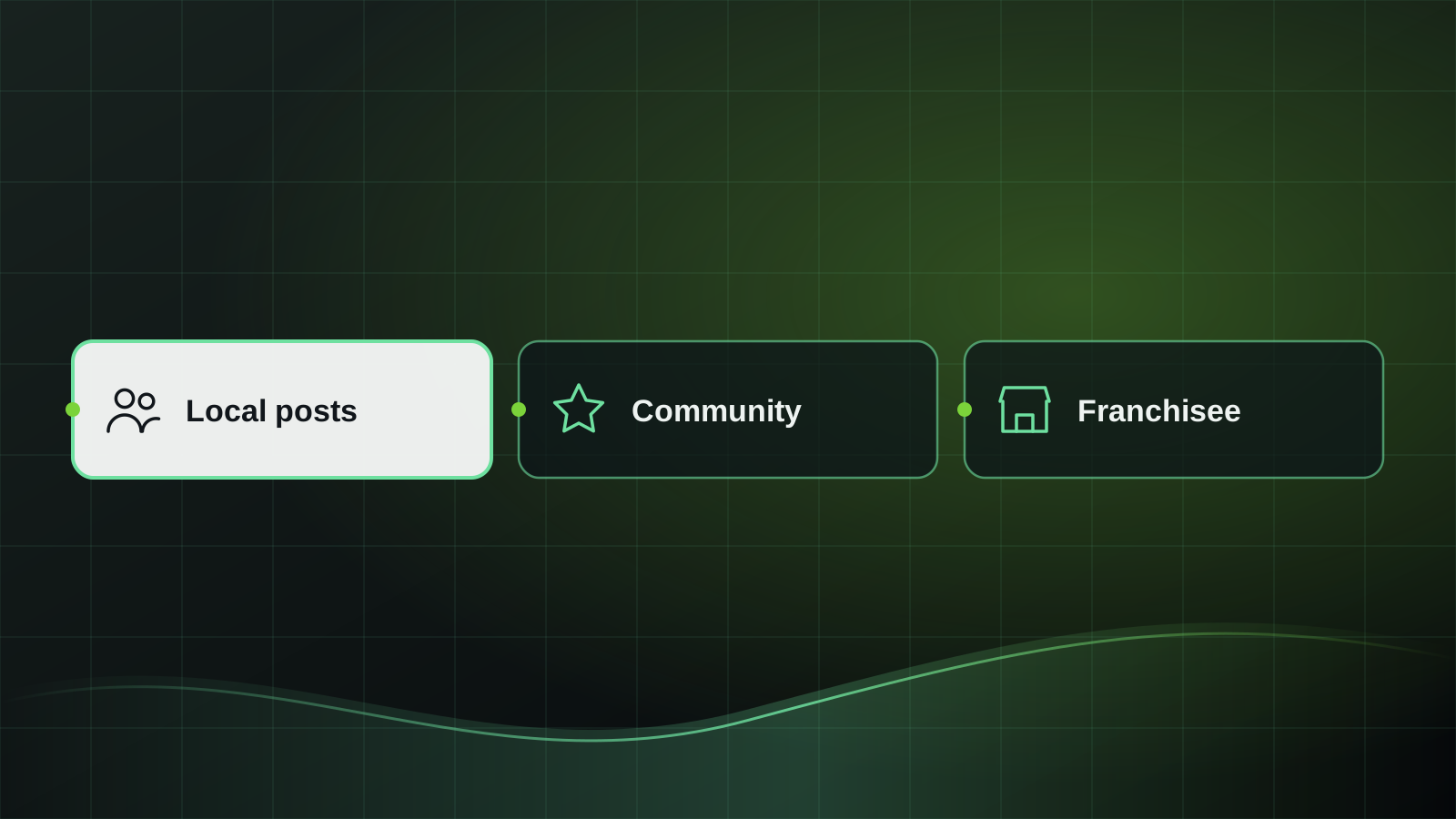
One national brand film, many local videos
The franchisor should own the national layer. That means a brand film that explains what the brand stands for and why customers should choose it, plus a small library of national how-to and explainer videos that every franchisee can use. These carry the brand's look, voice and promises, and they are where most of the production budget should go.
Franchisees own the local layer. Short videos filmed in their own territory, such as a team introduction, a job in progress, a local event or a customer story, show that the national promise is delivered by real local people. They do not need to be polished. They need to be honest, on brand and clearly local, with the town or area named.
The two layers should link. Each local video can end with the national brand line, and the franchisor's channel can feature a regular round-up of the best local content. This gives the network the reach of a national advertiser and the trust of a local business, which is hard for independent competitors to match. Our post on organic social for franchise brands covers the same model for social channels.
Rules for franchisee-made content
Franchisee video can strengthen the brand or damage it, so the rules need to be clear and short enough to follow. The aim is to make good local video easy and risky local video unlikely, without forcing every clip through a slow approval queue.
Two legal points need attention. First, customer stories count as testimonials under the UK advertising code: marketers must hold evidence that a testimonial is genuine, with contact details for the person (rule 3.47), and must not use it without permission, normally in writing (rule 3.50) (ASA, 2026). Second, the ASA says people personally or commercially connected to a brand, such as owners or employees, must make content about that brand obviously identifiable as advertising, with a clear label such as "Ad" at the start or in the YouTube title or thumbnail (ASA, 2026). Franchisees posting about their own business on personal accounts should follow the same principle.
- Brand kit: logo, opening and closing cards, colours, fonts and approved music, all ready to drop in.
- Approved claims: a short list of what can be said about price, guarantees and results, and what must never be said.
- Consent: a simple written consent form for any customer or member of the public who appears, kept on file.
- Safety and privacy: no customer addresses, number plates or children shown without consent; safe working practices on screen.
- Review route: light-touch review for routine clips, full review for anything with claims or customer testimony.
How video supports local search and recruitment
Local video helps people choose a nearby branch. Google Business Profile accepts videos of up to 30 seconds, up to 75 MB and at 720p or higher, and new media can take 24 to 48 hours to appear after upload on a verified profile (Google Business Profile Help, 2026). A short clip of the team, premises or a typical job on each location's profile, and embedded on each location page of the franchisor's website, makes the listing feel real.
Local discovery is changing too. BrightLocal's 2026 Local Consumer Review Survey of 1,002 US adults found 97% read reviews for local businesses, and use of ChatGPT and other generative AI tools to find local business recommendations rose from 6% to 45% in a year (BrightLocal, 2026). It is a US sample, but the trend suggests that consistent, well-described local content across profiles, pages and video will matter more, not less, as AI tools assemble recommendations. Our post on local search and media goes into the listings side.
Video also recruits. Prospective franchisees want to see what the work and the support look like. Day-in-the-life films, franchisee interviews and footage of training show this better than a brochure. Keep earnings claims out unless they meet advertising rules, as our post on recruiting franchisees before they search explains.
A method to follow
Plan the national layer once a year and the local layer every month. The franchisor sets the themes and supplies the templates; franchisees fill them with local footage; a central team reviews, publishes and promotes the best of it.
For example, a hypothetical home-services franchisor with 60 territories might produce one national brand film and eight national explainers, then ask each franchisee for two short local clips a month using a phone kit and templates. The central team would add the best clips to a regional playlist, post them to each Google Business Profile, and run a modest paid YouTube campaign around the brand film in areas where branded search is weakest.
- Define the brand promise the national film must carry, and what local video should prove.
- Produce the national film and a small library of explainers every franchisee can use.
- Give franchisees a phone filming kit, templates, consent forms and a one-page rulebook.
- Set a simple monthly local brief, such as one team clip and one job or event clip.
- Review, publish and add local clips to profiles, location pages and regional playlists.
- Use paid YouTube to extend the national film into the areas that need it most.
- Report results by territory every month and share the best examples across the network.
Measuring views, watch time and enquiries by area
Measure by territory, because that is how a franchise network makes money. YouTube Analytics lets you filter results by geography in advanced mode and compare individual videos or groups (YouTube Help, 2026), so you can see which regions watch the brand film and which local videos hold attention. Downloaded reports are limited to 500 rows, so larger networks may need the reporting API.
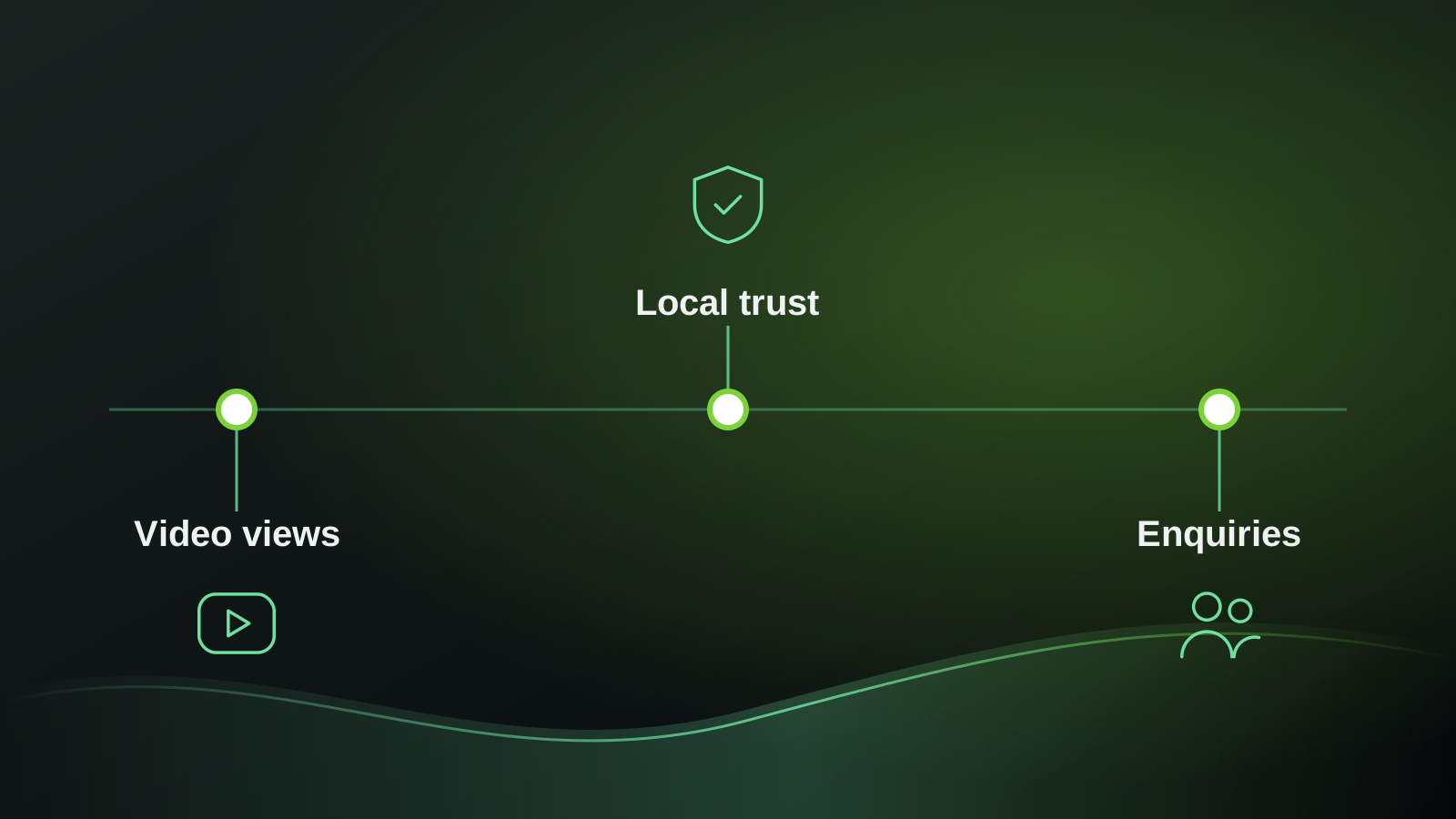
Track three things for each area. Attention: views, average view duration and retention for national and local videos. Brand effect: branded search volumes by region, and for paid campaigns a Brand Lift survey, which compares people who saw the ads with a similar control group on measures such as ad recall, awareness and consideration (Google Ads Help, 2026). Demand: calls, direction requests and enquiries from each Google Business Profile and location page, ideally with call tracking by territory.
Then compare territories that are active on video with similar territories that are not. This is not a perfect experiment, but over six to twelve months it shows whether video is helping and where the network should invest next. Our brand growth page sets out how we measure brand work more widely.
Common mistakes, what good looks like and what to ask a supplier
The most common mistakes are a beautiful national film with nothing local behind it, local videos that ignore the brand altogether, customer footage used without consent, unlabelled promotional posts from franchisees' personal accounts, and measuring the whole network as one number so no franchisee can see their own results. Another is expecting franchisees to make video with no kit, template or time allowance.
Good looks like a network where the brand film sets the promise and dozens of honest local clips prove it, where every location profile has current video, and where each franchisee can see views and enquiries for their own area. Online video is a growing part of UK advertising, up 20% to £9.3 billion in 2025 according to IAB UK (IAB UK, 2026), so a clear network approach helps a franchise compete with larger national brands. See our franchising page for how this fits a wider plan.
- How will you split the work between the national film and franchisee-made video?
- What templates, kit and training will franchisees receive, and how long will each clip take them?
- How will you manage consent, claims and advertising labels for local content?
- How will you report views, watch time and enquiries for each territory?
- How will paid YouTube be targeted to the areas where the brand is weakest?
Put this into practice
Book a discovery call and we will review your channels and results first, then agree what to test.
Talk about video for your franchise networkQuestions and answers
Should franchisees make their own videos?
Yes, within clear rules. Short local videos made by franchisees show real people and places in each area, which builds trust. The franchisor should supply templates, approved claims, consent forms and a light review process so the content stays on brand and within the rules.
Do franchisee videos need to be labelled as adverts?
Often, yes. The ASA says people personally or commercially connected to a brand, such as owners and employees, must make promotional content about it obviously identifiable as advertising, for example with an "Ad" label at the start or in the YouTube title.
Can we add video to Google Business Profiles?
Yes. Google Business Profile accepts videos up to 30 seconds long, up to 75 MB and at 720p or higher. New media can take 24 to 48 hours to appear, and only shows once the profile is verified.
How do we measure video results for each franchise territory?
Filter YouTube Analytics by geography, track branded search by region, and count calls, direction requests and enquiries from each location's profile and web page. Comparing active territories with similar inactive ones over six to twelve months shows whether video is working.
Can video help recruit franchisees?
Yes. Day-in-the-life films, franchisee interviews and training footage show prospective franchisees what the work and support look like. Avoid earnings claims unless they meet UK advertising rules, and keep recruitment content honest about the commitment involved.
References
- Franchise World, "The National Franchise Survey 2024 results make for gratifying reading", 2024
- Ofcom, "From apps to AI search: how the UK goes online in 2025" (Online Nation 2025), 2025
- Ofcom, "Tuning into YouTube: UK's media habits revealed" (Media Nations 2025), 2025
- ASA, "Testimonials and endorsements" (CAP AdviceOnline), 2026
- ASA, "Recognising ads: social media" (CAP AdviceOnline), 2026
- Google Business Profile Help, "Manage photos and videos for your Business Profile", 2026
- BrightLocal, "Local Consumer Review Survey 2026", 2026
- YouTube Help, "Use advanced mode in YouTube Analytics", 2026
- Google Ads Help, "About Brand Lift", 2026
- IAB UK, "Digital Adspend", 2026
 Alexander