What conversion means for a franchise network
Many franchise networks now take money or commitments online. A home services franchise sells fixed-price jobs or call-out slots. A fitness franchise sells memberships and class passes. A retail franchise sells products for delivery or collection. In each case, a visitor lands on a page, chooses something, and either completes a booking or checkout or leaves. Conversion rate optimisation, or CRO, is the work of increasing the share who complete.
Franchising adds a twist. The same buying journey runs across tens or hundreds of locations, often on pages that franchisees can edit, with local prices, local opening times and local staff. A fix that lifts conversion on one location page can lift it everywhere, if it is built into the template. A mistake can spread just as quickly. For general product page checks, see ten checks for product page conversion; this post deals with what is specific to franchise networks.
Why it matters: the size of the sector and the cost of friction
Franchising is a large part of the UK economy. The 2024 National Franchise Survey by the British Franchise Association and NIC Services Group counted 1,009 franchise brands and 50,421 units, contributing £19.1 billion to the UK economy. Personal services franchises grew 53% since the previous survey, while store-based retail franchises fell 25%, reported by Franchise Direct (Franchise Direct, 2024). Growth is shifting towards service brands, many of which now rely on online booking.
Checkout friction is well documented. Among US shoppers who abandoned an order, Baymard Institute found that 40% left because of extra costs such as delivery, tax or fees, 19% did not trust the site with their card details, 18% were asked to create an account, 17% faced a long or complicated checkout and 12% could not see the total cost up front (Baymard Institute, 2026). These are US survey figures for ecommerce, but the same causes apply to a booking form for a boiler service or a gym membership.
Speed is a widespread weakness. The HTTP Archive Web Almanac found that only 48% of mobile websites passed all three Core Web Vitals in 2025, up from 44% in 2024, and that only 62% of mobile sites had a good Largest Contentful Paint (HTTP Archive, 2025). Franchise sites often carry booking widgets, maps, chat tools and tracking scripts for every location, which makes them slower than they need to be.
How it works: product and booking pages, checkout and forms
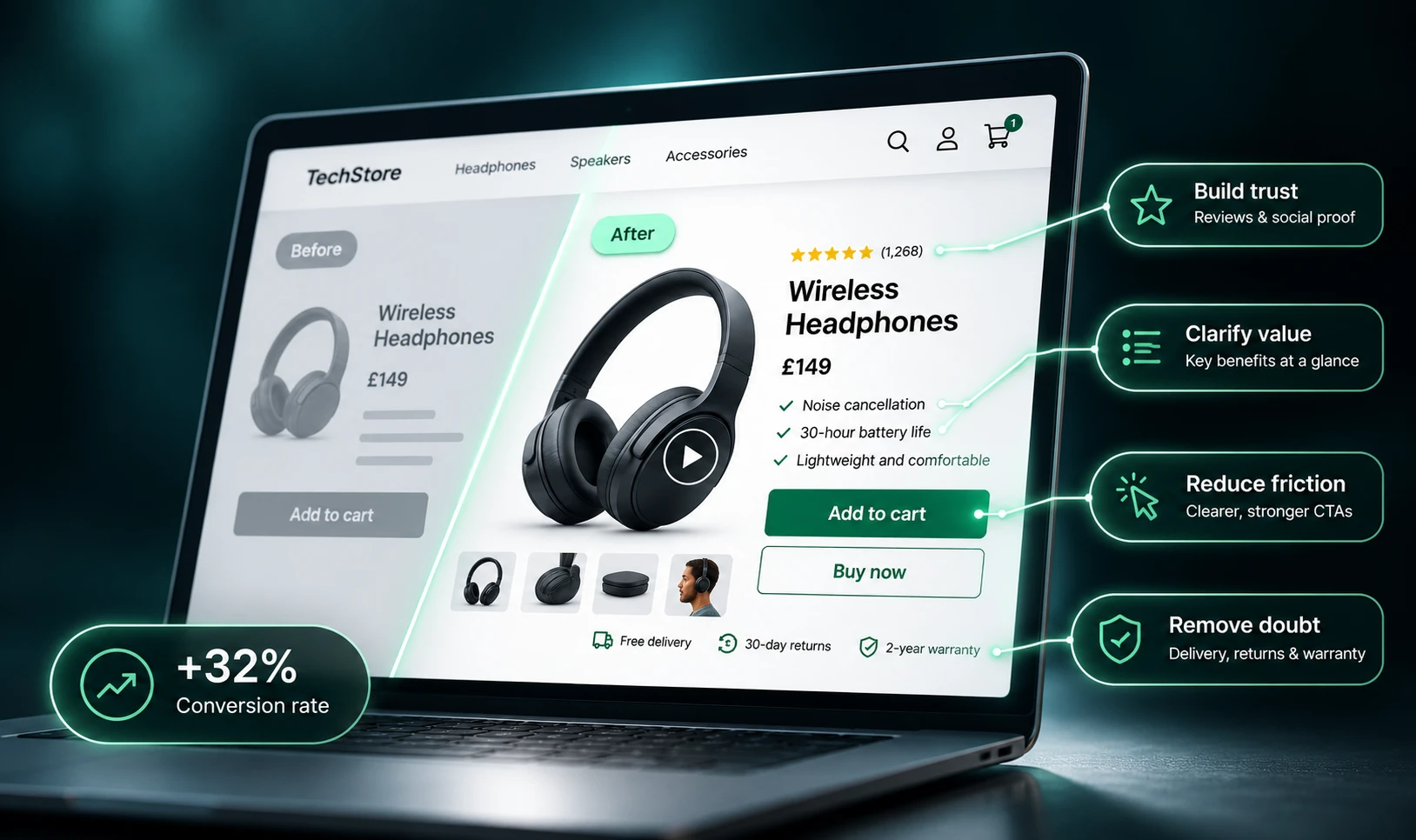
On a franchise site, the product or booking page has to answer three questions fast: what exactly am I buying, what will it cost here, and when can I have it? Show the local price, or a clear price range, next to the call to action. Show the next available slots or delivery dates before the visitor commits. Hidden prices and "call for a quote" pages send people back to search results.
Then reduce the work in the checkout or booking form. Baymard reports that the average US checkout shows 23.48 form elements by default, including 14.88 form fields, against an ideal of around 12 to 14 elements (Baymard Institute, 2026). Ask only for what the franchisee needs to deliver the service. Use postcode lookup for addresses, and let people pay or book as a guest. Baymard also found that 42% of sites ask users to create an account at the start of checkout or before the order is placed, and recommends moving that request to the confirmation step (Baymard Institute, 2023).
Location routing needs care. Many franchise sites ask for a postcode before showing anything. That works if it is the first, single step and the visitor is then shown their local franchisee's prices and slots. It fails when the postcode step leads to a generic contact form or a page for the wrong area.
- Show the local price and the next available slot beside the main button.
- Cut the form to the fields the franchisee needs; use postcode lookup.
- Offer guest checkout and ask for an account only after the order.
- Show the full cost, including any call-out or delivery fee, before payment.
Speed and trust signals
Set speed targets the whole network must meet. Google's guidance for a good experience is a Largest Contentful Paint within 2.5 seconds, Interaction to Next Paint of 200 milliseconds or less and Cumulative Layout Shift of 0.1 or less, measured at the 75th percentile of page loads on mobile and desktop (web.dev, 2026). Build the template to meet these targets, then stop franchisees adding scripts that break them.
Trust matters more when the buyer is letting someone into their home or signing a membership. Show local reviews on the local page, with the reviewer's area and the date. BrightLocal's 2025 survey of 1,026 US adults found that just 4% never read online business reviews, while the share who trust reviews as much as personal recommendations fell to 42% from 79% in 2020 (BrightLocal, 2025). Reviews still get read, but people treat them with more caution, so specific, recent reviews do more than a headline star score.
The franchise brand itself is a trust signal. In a PowerReviews survey of US shoppers, 63% said they were more likely to buy a product with no reviews if other products from the same brand were highly rated (PowerReviews, 2023). For a new franchise location with few local reviews, showing the network's overall rating alongside local reviews helps bridge the gap.
A method: one tested template, run across many franchisees
The franchisor should own the template and the testing. Most individual locations do not have enough traffic to run a reliable A/B test on their own. The whole network usually does. Run tests at network level, on the shared template, then roll the winning version out everywhere. Leave franchisees control over the local details that genuinely differ, such as prices, slots, team photos and service areas, and lock the rest.
A workable cycle looks like this. Audit the journey on mobile for a sample of locations. Rank the problems by likely impact, starting with cost transparency, form length and speed. Test one change at a time on the template, with enough traffic to reach a clear result. Roll out winners, then watch conversion by location to catch any franchisee whose page has drifted from the standard.
For example, a home services franchise with 60 locations might find that its booking form asks for 18 fields and hides the call-out fee until the last step. Testing a shorter form with the fee shown on the service page, across all 60 locations at once, could give a clear answer within weeks, where a single location would need months. This is a hypothetical example to show the method.
How to measure it, and common mistakes
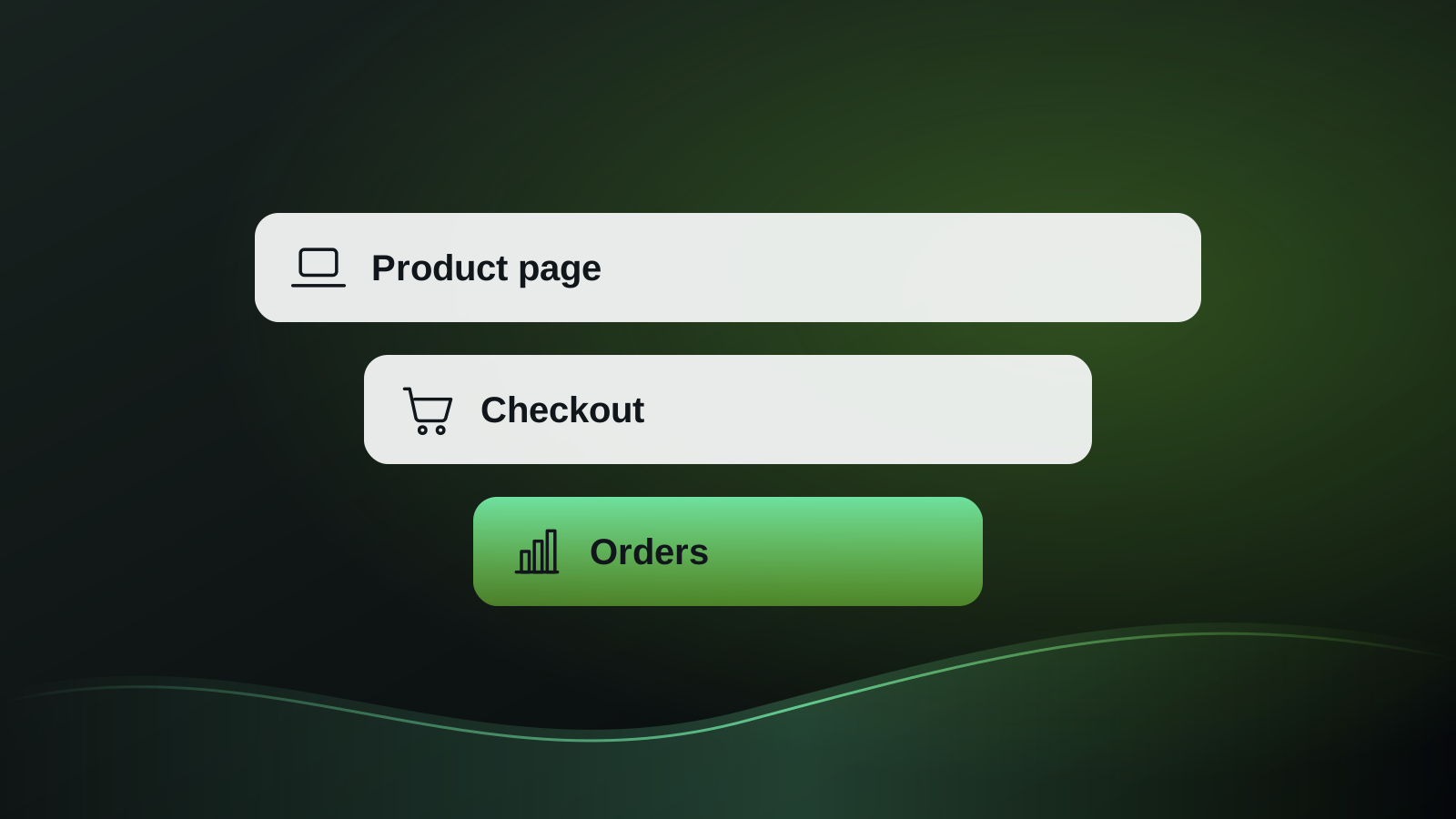
Measure the share of visitors who complete a booking or order, by location and by device, alongside revenue per visitor. Track each step of the journey, from service page to slot selection to payment, so you can see where people drop out. Report the network figure and the spread between the best and worst locations, because the spread shows where the template is not being followed or where local factors such as price are holding back sales. Online sales are now a large share of retail, at 28.3% of GB retail sales in September 2026 (ONS, 2026), so this reporting deserves the same attention as store trading figures.
Common mistakes include letting each franchisee build its own page, so that nothing can be tested; testing on a single location with too little traffic to learn anything; hiding call-out or delivery fees until the last step; adding tracking and chat scripts to every page without checking speed; and measuring only network-wide conversion, so weak locations stay hidden.
What good looks like, and what to ask a supplier
Good looks like one fast, well-tested template with local prices, slots and reviews on every location page, a short checkout or booking form with guest options and full costs shown early, and a monthly report of conversion by location that the franchisor and franchisees both see. Each quarter brings a few tested improvements, rolled out across the whole franchise network at once.
When choosing a supplier, ask questions that test whether they understand franchising as well as CRO.
- How will you test changes at network level when each location has little traffic?
- Which parts of the template will franchisees control, and which will be locked?
- How will you show local prices, slots and reviews on each location page?
- What speed targets will the template meet, and how will you keep them?
- How will you report conversion by location and by step of the journey?
Put this into practice
Book a discovery call and we will review your channels and results first, then agree what to test.
Talk about your franchise network's conversionQuestions and answers
Why should the franchisor own conversion testing?
Most single franchise locations do not get enough traffic to run reliable tests. Testing on a shared template across the whole network reaches a clear result far faster, and the winning version can then be rolled out to every location at once.
What are the most common causes of abandoned online bookings?
Surprise costs such as call-out or delivery fees, long forms, being forced to create an account, doubts about paying on the site, and slow pages are the usual causes. Showing the full cost early and cutting the form to essential fields fixes many of them.
What page speed should a franchise website aim for?
Google suggests a Largest Contentful Paint within 2.5 seconds, Interaction to Next Paint of 200 milliseconds or less and Cumulative Layout Shift of 0.1 or less, measured at the 75th percentile of page loads. The shared template should meet these on mobile.
Should franchise location pages show local reviews?
Yes. Local, recent reviews with the reviewer's area help visitors trust the specific franchisee they are booking. For new locations with few reviews, showing the network's overall rating alongside local reviews can help until the local count grows.
How should a franchise network measure online conversion?
Track the share of visitors who complete a booking or order, by location, device and journey step, plus revenue per visitor. Report the network average and the spread between the best and worst locations, so that weak pages and local problems are visible.
References
- Franchise Direct, "The results are out: the BFA and NIC Services Group reveal the results of the 2024 National Franchise Survey", 2024
- Baymard Institute, "Cart abandonment rate statistics", 2026
- Baymard Institute, "Save account creation for the confirmation step (42% don't)", 2023
- HTTP Archive, "Web Almanac 2025: Performance", 2025
- web.dev (Google), "Web Vitals", 2026
- BrightLocal, "Local Consumer Review Survey 2025", 2025
- PowerReviews, "Survey: The Ever-Growing Power of Reviews (2023 Edition)", 2023
- ONS (Office for National Statistics), "Internet sales as a percentage of total retail sales (ratio) (%)", 2026
 Alexander