Why the question matters now
Online is a large and steady share of UK retail. The Office for National Statistics put internet sales at 28.8% of all retail sales in September 2026 (ONS, 2026). That share is close to 29%, which means growth for most brands comes from winning share, not from the market expanding around them.
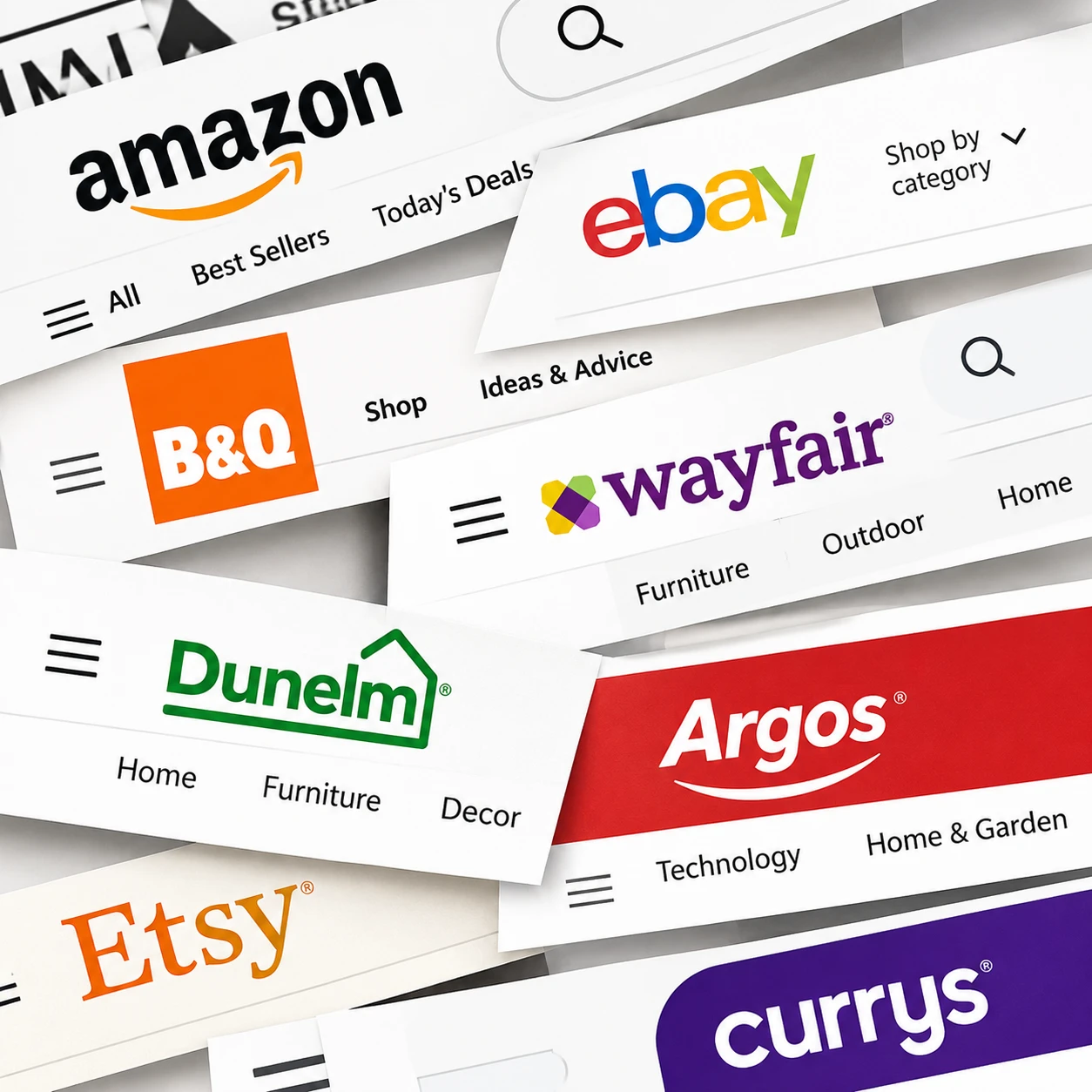
A large part of that share runs through marketplaces. Ofcom's figures, based on Ipsos audience measurement, show 43.2 million UK adults visited Amazon in May 2025, 88% of online adults, and 30.7 million visited eBay, 63% (Ofcom, 2025). Newer platforms are growing fast: Temu's monthly UK audience more than doubled from 13.8 million in May 2023 to 28.4 million in May 2025, and Vinted reached 29% of online adults after a 53% rise over the same two years (Ofcom, 2025).
Those numbers explain the pull of marketplaces. They also explain the risk: if most of your sales depend on one platform's rules, fees and search algorithm, a change you do not control can move your revenue overnight.
What marketplaces do well
Marketplaces put your product in front of shoppers who already search there, and they bring trust, delivery options and a familiar checkout. For a new brand, that reach can be valuable. The trade-off is fees, price comparison and limited access to the customer. Our marketplace service covers how to choose and run them.
Shoppers bring delivery and trust expectations with them. Baymard Institute's research on checkout abandonment among US shoppers found that 20% had left a purchase because delivery was too slow and 19% because they did not trust the site with their card details (Baymard Institute, 2025). A large marketplace removes much of that doubt for a brand nobody has heard of, which is part of what the fees pay for.
- Reach: an audience that is already searching and ready to buy.
- Trust: a checkout, returns process and payment system shoppers already know.
- Logistics: optional fulfilment services that can offer fast delivery without your own warehouse.
- Discovery: a way to test demand for a new product before investing in your own traffic.
What your own site does well
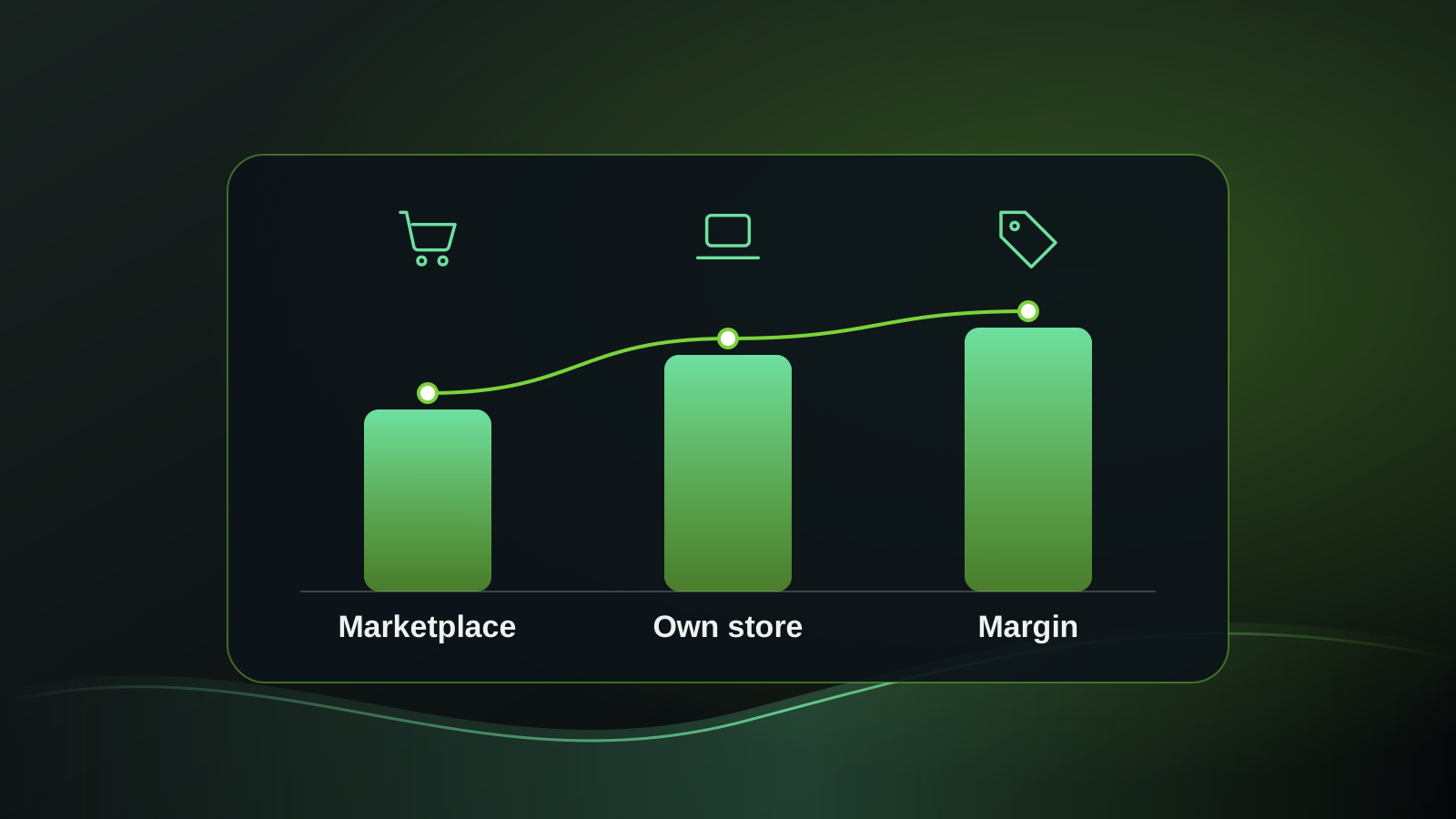
Your own site keeps the margin, the brand experience and the customer record. You can build repeat purchase through email, offer bundles and tell the full product story. The trade-off is that you must bring the traffic yourself, which is why ecommerce sales planning starts with search, content and paid media.
The customer record is the part brands most often undervalue. A customer who buys from your site can be emailed about related products under the UK soft opt-in rule, provided you offered a clear chance to refuse marketing when you collected their details and include an opt-out in every message (ICO, 2026). That repeat channel is much harder to build when the marketplace owns the relationship.
Retention is where the economics change. Research by Frederick Reichheld of Bain and Company, summarised by Harvard Business Review, found that a 5% increase in customer retention could lift profits by between 25% and 95%, and the same article notes that acquiring a customer can cost five to 25 times more than keeping one (Harvard Business Review, 2014). The research is older and cross-industry, but the principle holds: the second order is where margin is made.
Decide by margin and data, not traffic alone
A marketplace order that looks large can leave little after fees, returns and advertising. Compare the contribution per order on each route, not the revenue. Then consider the data: if a sale on a marketplace means you never learn who the customer is, the second purchase is harder to win.
Start with the published fees. Amazon UK charges professional sellers £25 a month excluding VAT, plus a referral fee that is 15% of the sale price in most categories, with lower tiered rates in some, such as clothing at 5% up to £15 (Amazon, 2026). eBay charges UK business sellers a final value fee that varies by category, for example 11.9% for clothes, shoes and accessories, plus a per-order fee of £0.40 on orders over £10 (eBay, 2026). Fulfilment, storage, advertising and returns come on top.
For example, take a hypothetical £40 product with a £12 product cost. On a marketplace, a 15% referral fee is £6. If fulfilment adds £5 and sponsored listings add £4 per order, the contribution is £13. On your own site there is no referral fee, but if payment processing, packing and delivery cost £6 and paid media costs £12 per new order, the contribution is £10 on the first order. The marketplace wins the first sale. If a third of your own-site customers buy again within a year with no media cost, your own site wins over the customer's lifetime. Run the sum with your own numbers.
Use each route for its strength
Many brands use marketplaces to find new customers and their own site to build loyalty. Where the marketplace terms allow, keep the route to your own site clear, and make sure the product page there matches the one you own.
Packaging inserts, product registration for warranties and useful aftercare content can all give a marketplace buyer a reason to visit your site, as long as they respect the platform's rules. The aim is not to pull every customer away from the marketplace, but to make sure the people who like your product know where to find the full range.
- Put hero products and best sellers on marketplaces, where search volume is highest.
- Keep bundles, exclusives, refills and subscriptions on your own site, where you keep the margin.
- Use consistent product names, images and specifications across every channel.
- Price with care: undercutting your own site on a marketplace trains customers to buy there.
- Review contribution by channel every quarter, not just sales by channel.
Make the site convert
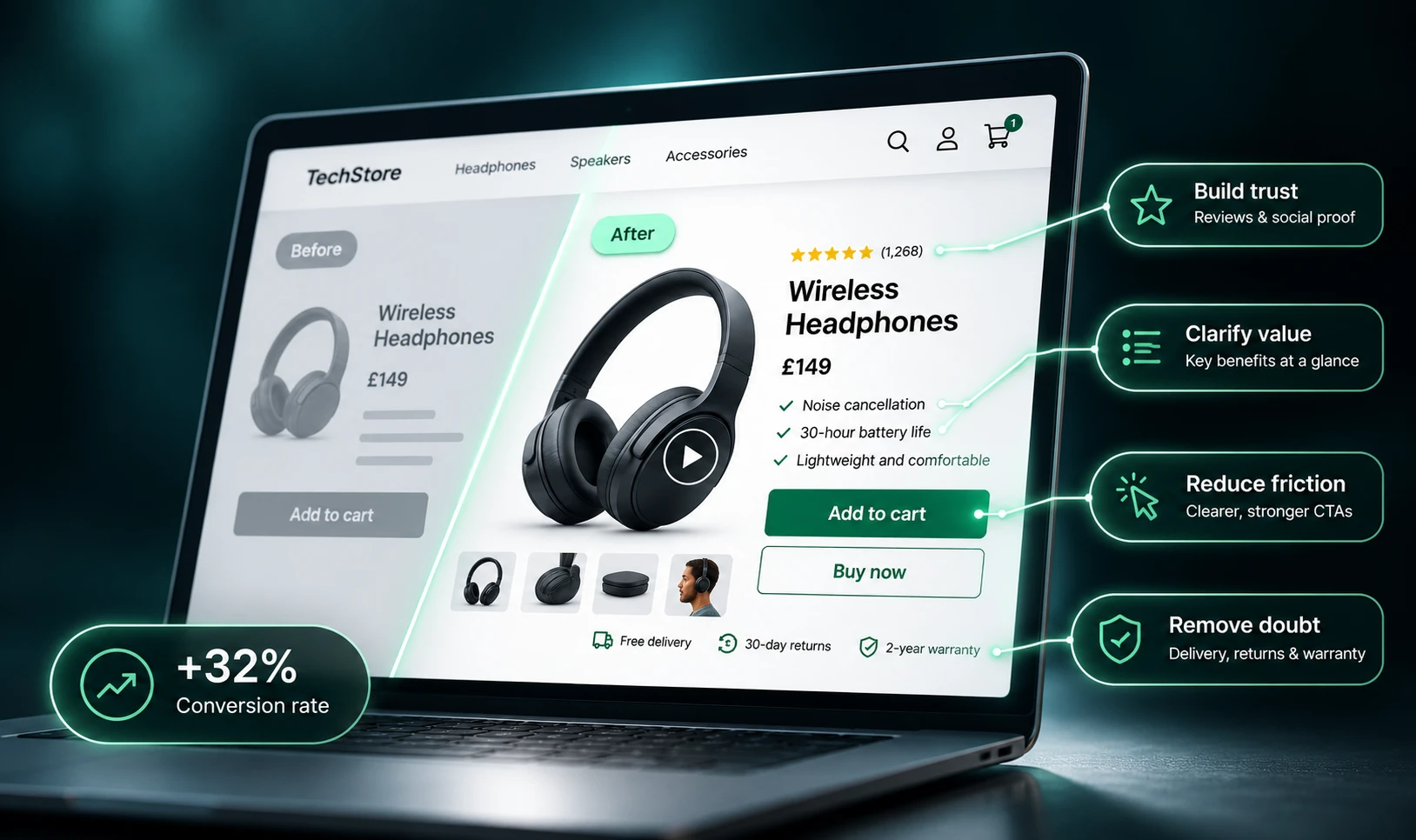
If most of your margin comes from your own site, its conversion rate matters most. Our conversion work looks at the product page, checkout and mobile experience, and the ten checks in our guide to product page conversion are a good place to start.
Costs shown late are the biggest single leak. Baymard found that 40% of US shoppers who abandoned a checkout did so because shipping, tax or fees were too high, and 13% because the returns policy was unsatisfactory (Baymard Institute, 2025). Marketplaces tend to show delivery cost and returns terms up front, so your own site has to do the same to compete. Reviews matter as well: Northwestern University's Spiegel Research Center found that a product with five reviews was 270% more likely to be bought than one with none (Spiegel Research Center, 2017).
Common mistakes, and what to ask a supplier
The usual mistakes are judging channels on revenue rather than contribution, ignoring advertising costs inside the marketplace, letting marketplace prices undercut your own site, and having no plan to capture customer data from the sales you do make directly. Another is treating marketplaces and the website as separate projects run by different people with different targets.
If you are working with an agency, ask how they will measure contribution per order on each channel, how they will treat marketplace advertising alongside your other paid media, how they plan to grow repeat purchase on your own site, and what they would change first on your product pages. A good answer starts with your margins, not with traffic targets.
Put this into practice
Book a discovery call and we will review your channels and results first, then agree what to test.
Plan your ecommerce salesQuestions and answers
Should we sell on marketplaces at all?
Often yes, as long as the contribution per order is positive after fees, fulfilment, advertising and returns, and the terms suit your brand. Test one marketplace with a small range before committing more stock.
Which metric shows whether a marketplace is worth it?
Contribution per order after fees, returns and advertising, compared with the same product sold through your own site. Add the value of a repeat customer to the own-site figure, because a marketplace sale usually does not give you that relationship.
How much does Amazon charge UK sellers?
Amazon UK charges professional sellers £25 a month excluding VAT, plus a referral fee that is 15% of the sale price in most categories, with tiered rates in some categories. Fulfilment, storage and advertising costs are extra, so check the current rate cards.
Can we email customers who bought on a marketplace?
Generally you should not assume so. The marketplace usually controls the customer relationship and its terms limit how you can contact buyers. Customers who buy on your own site can receive marketing emails under the soft opt-in rule if the conditions are met.
Is it worth building our own site if Amazon has the traffic?
Usually yes. Your own site keeps the margin and the customer record, which makes repeat purchase cheaper. Research summarised by Harvard Business Review links small gains in retention to large gains in profit.
References
- ONS (Office for National Statistics), "Internet sales as a percentage of total retail sales (ratio) (%)", 2026
- Ofcom, "Online Nation 2025", 2025
- Amazon, "Selling on Amazon: pricing", 2026
- eBay, "Business selling fees", 2026
- Baymard Institute, "Cart abandonment rate statistics", 2025
- ICO, "Electronic mail marketing" (Guide to PECR), 2026
- Harvard Business Review, "The value of keeping the right customers", 2014
- Spiegel Research Center, Northwestern University, "How online reviews influence sales", 2017
 Alexander