What this is about: margin, not only presence
Most consumer brands no longer ask whether to sell on marketplaces. They ask how to sell there without giving away control of price, presentation and profit. The broader question of marketplaces against your own site is covered in marketplaces or your own site. This post goes a level deeper, into the operating rules a consumer brand needs once it is already selling on Amazon, eBay or a category marketplace.
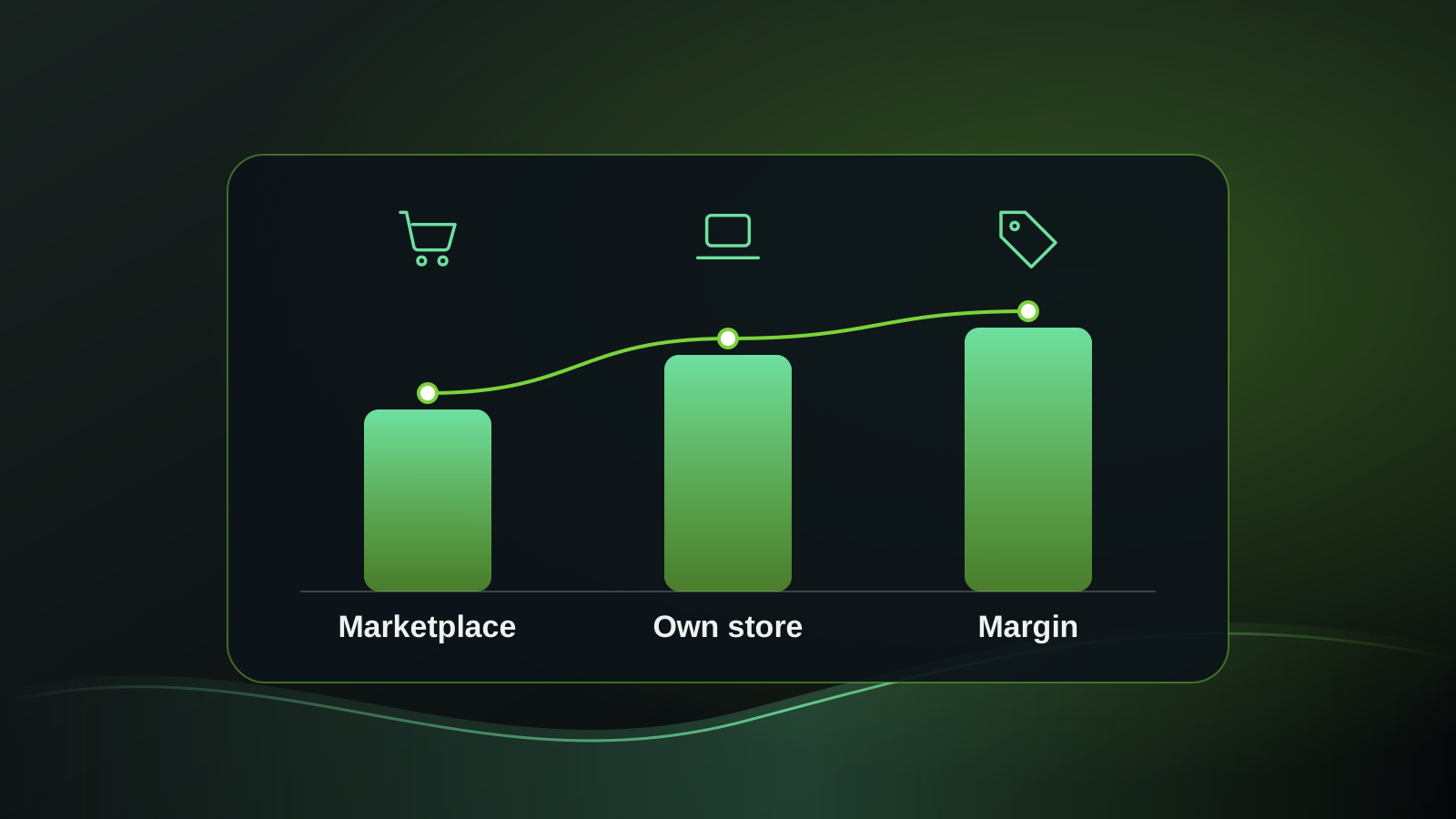
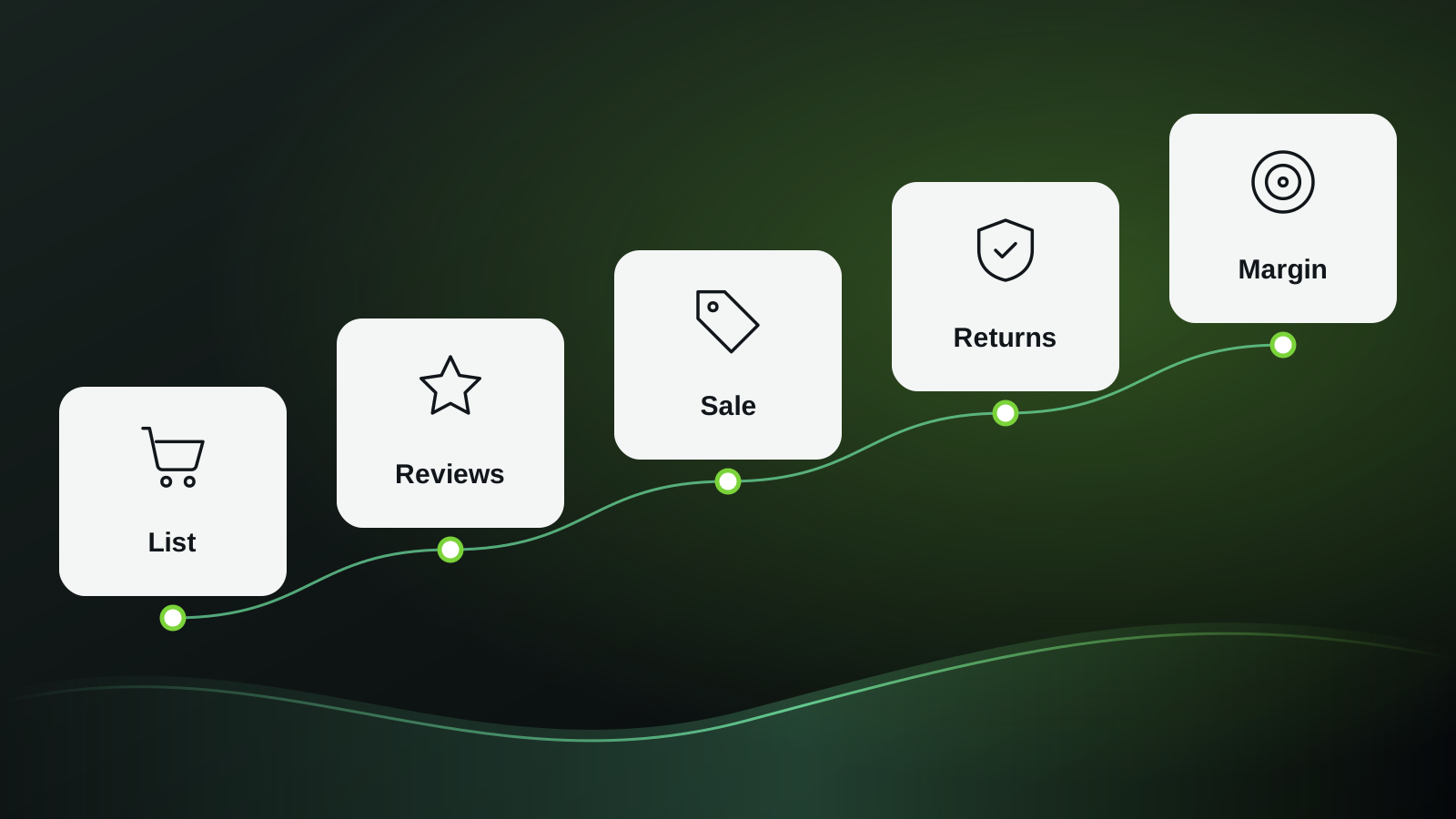
Four areas decide whether a marketplace adds profit or only adds revenue: brand control over listings, the quality and honesty of reviews, pricing and promotion rules, and the full cost of fees, returns and fulfilment. Get these right and a marketplace becomes a reliable source of new customers. Get them wrong and it becomes a busy channel that loses money on every order.
Why it matters: the reach and the cost, in figures
The reach is real. Amazon was visited by 88% of UK online adults, about 43.2 million people, in May 2025, and eBay by 63%, according to Ofcom's Online Nation data reported by ChannelX (ChannelX, 2025). With internet sales at 28.3% of all GB retail sales in September 2026 (ONS, 2026), a consumer brand that is absent from the largest marketplaces is invisible to a large share of online shoppers.
The costs are also real. Amazon UK charges professional sellers £25 a month excluding VAT, and says most referral fees fall between 8% and 15% of the total price the buyer pays, with a minimum per item. Fulfilment by Amazon adds a per-unit fee based on size and weight, plus monthly storage that rises from October to December. When an order is refunded, Amazon keeps a refund administration fee of £5 or 20% of the referral fee, whichever is lower (Amazon, 2026).
Returns add a further cost. Retail Economics forecasts that UK non-food returns will be worth £25.1bn in 2025, with the overall returns rate easing from 21% to 19.5% (Retail Economics, 2025). That is a forecast drawn from a 2,000-person consumer survey and a test of 100 online returns, focused on clothing and footwear, but it shows how much margin can leak after the sale.
How brand control works on a marketplace
On a large marketplace, several sellers can offer the same product on one product page. Whoever controls the listing controls the title, images, description and often the price customers see first. For a consumer brand, that makes listing ownership the first job. On Amazon, that means enrolling in Brand Registry, which gives a trademark owner more say over listing content and access to reporting tools for infringements.
Counterfeits and unauthorised sellers are part of the picture. Amazon says its proactive controls blocked more than 99.9% of suspected infringing listings in 2025 before a brand had to report them (Amazon, 2026). That is the marketplace's own figure about its own systems, so treat it as a claim rather than an independent audit. Brands still need someone checking their listings each week for hijacked content, wrong images and unauthorised resellers.
Control also covers content. Marketplace shoppers compare products in seconds, often on a phone. Titles that lead with what the product is and does, images that show scale and use, and short, factual bullet points do more than brand language. Keep the same product facts on the marketplace and on your own site, so that neither customers nor AI assistants find conflicting details.
Reviews and ratings: earn them, do not manufacture them
Reviews carry more weight on a marketplace than almost anywhere else. In a PowerReviews survey of 8,153 US consumers, 45% said they would not buy a product with no ratings or reviews, and 56% said they trust a star rating alone less than a rating with a written review (PowerReviews, 2023). It is a vendor survey of US shoppers, but the pattern holds for UK marketplaces too: a new listing with no reviews struggles to sell.
The rules are now strict. Fake reviews, and reviews that hide an incentive, became a banned practice in the UK on 6 April 2025, with fines of up to 10% of annual global turnover (CMS, 2025). The Competition and Markets Authority published guidance on 4 April 2025 explaining what businesses must do to comply (CMA, 2025). Paying for reviews, gating requests so only happy customers are asked, or posting reviews from staff all carry real risk.
Earn reviews the honest way. Use the marketplace's own review request tools, ask every buyer rather than a selected few, and fix the product issues that negative reviews reveal. A steady flow of genuine reviews, including some critical ones, is more convincing to shoppers than a perfect score.
A method: set pricing rules and know the cost of every unit
Start with a unit economics sheet for each product. Take the selling price, then subtract the referral fee, fulfilment fee, storage, advertising cost per unit, expected returns and the cost of goods. The result is contribution per unit on the marketplace. Do the same for your own site, with payment fees, delivery, returns and the cost of paid traffic. Only then can you see where each product actually makes money.
Then set pricing and promotion rules. Decide the lowest price each product may sell at, which promotions are allowed on each channel, and how often. Large price gaps between your own site and a marketplace train customers to shop only on the cheaper channel. Frequent deep discounts on a marketplace can also set a reference price that is hard to raise later.
For example, a skincare brand selling a £20 moisturiser might find that after a 15% referral fee, fulfilment, storage, advertising and returns, the product makes a few pounds on the marketplace but more on its own site, where repeat orders also come through email. A sensible plan might keep the moisturiser on the marketplace for discovery, while putting bundles and refills on its own site. This is a hypothetical example, but the arithmetic is the one every brand should run.
- List every cost per unit: referral, fulfilment, storage, ads, returns and cost of goods.
- Set a floor price and an allowed promotion calendar for each channel.
- Review the sheet each quarter, and whenever fees change.
When a marketplace buys reach, and when to protect margin
A marketplace is worth its fees when it brings customers you could not reach as cheaply elsewhere. That is usually true for new products that need reviews and visibility, for well-known product types that shoppers search for directly on the marketplace, and for occasional buyers who will never visit a brand's own site.
Protect margin on your own site for products with high repeat rates, bundles and refills, premium or limited editions, and anything where the customer relationship matters after the sale. On your own site you hold the customer's details and, with the right consent, can bring them back through email at no media cost. A marketplace keeps that relationship for itself.
Many brands end up with a split range: hero products on both channels for reach, and higher-margin or repeat lines kept mainly on their own site. Track the split by product, not as a blended channel average, because a few loss-making lines can hide behind a healthy total.
Common mistakes, what good looks like, and what to ask a supplier
Common mistakes include judging the marketplace on revenue rather than contribution, letting advertising spend on the marketplace grow without a target cost per sale, ignoring returns in the margin calculation, and leaving listings to drift until a reseller rewrites them. Another is chasing reviews in ways that now break the law.
Good looks like a short list of products chosen for the marketplace on purpose, with owned listings, clean content, a steady flow of genuine reviews and a pricing policy applied the same way every month. Contribution per unit is reported by product and by channel, and the brand can explain why each product sells where it does. It fits within a wider ecommerce plan and a clear view of your consumer brand position.
- How will you calculate contribution per unit for each product and channel?
- How will you protect our listings and report unauthorised sellers?
- How will you grow reviews within the UK rules on fake and incentivised reviews?
- What floor prices and promotion rules will you apply, and how will you police them?
- What target cost per sale will you set for marketplace advertising?
- Which products do you recommend keeping mainly on our own site, and why?
Put this into practice
Book a discovery call and we will review your channels and results first, then agree what to test.
Talk about your marketplace marginQuestions and answers
How much does it cost to sell on Amazon UK?
Amazon UK charges professional sellers £25 a month excluding VAT, plus referral fees that are mostly between 8% and 15% of the sale price, with a per-item minimum. Fulfilment by Amazon adds per-unit and storage fees, and refunds carry an administration fee. Check current rates before planning.
What is Amazon Brand Registry?
Brand Registry is Amazon's programme for trademark owners. It gives a brand more control over its product listings and access to tools for reporting counterfeits and other infringements. Most consumer brands selling on Amazon should enrol before scaling up.
Are incentivised reviews legal in the UK?
Fake reviews, and reviews that hide an incentive, have been banned in the UK since 6 April 2025, with fines of up to 10% of global turnover. Businesses that publish reviews must also take steps to prevent and remove banned reviews. Ask every buyer, and never pay for positive ratings.
Should a consumer brand sell the same products on a marketplace and its own site?
Often only some of them. Hero products may sell on both for reach, while refills, bundles and high-margin lines sit mainly on the brand's own site, where it keeps customer data and can win repeat orders through email. Decide product by product using contribution per unit.
How do returns affect marketplace margin?
Returns cost fees, handling and sometimes the product itself, and a refunded marketplace order can still carry an administration charge. Include an expected returns rate for each product in the unit economics, and treat high-return products with care on any channel.
References
- ChannelX, "Ofcom Online Nation report reveals UK Top 10 Retail sites", 2025
- ONS (Office for National Statistics), "Internet sales as a percentage of total retail sales (ratio) (%)", 2026
- Amazon, "Selling on Amazon: pricing" (UK), 2026
- Retail Economics and ZigZag, "ZigZag returns benchmark 2025", 2025
- Amazon, "Creating a Trustworthy Shopping Experience for Customers", 2026
- PowerReviews, "Survey: The Ever-Growing Power of Reviews (2023 Edition)", 2023
- CMS, "No more faux five-stars: The DMCC Act bans fake reviews", 2025
- Competition and Markets Authority (GOV.UK), "Fake reviews" (CMA208), 2025
 Alexander