What a local email programme looks like in a franchise
In a franchise network, email has two jobs. The brand wants a consistent voice and a single view of customers. Each franchisee wants to fill their own diary or tills this week. A good programme serves both by running one CRM, owned and governed by the franchisor, with each customer tagged to a home site, so local messages go to local people.
The core messages are simple: a pre-opening list for a new site, an opening announcement, a welcome series after first visit, local offers tied to quiet periods, and reminders for repeat services. Brand-wide campaigns sit on top, filtered by site so that a customer in Bristol never receives a Glasgow opening offer.
This piece focuses on the local and franchise side. For what to send after a first purchase more generally, see email after the first order.
Why email matters for franchise sites
The franchise sector is large and local. The British Franchise Association's 2024 survey with NIC Services Group counted 50,421 franchised units across 1,009 systems, with average turnover of about £400,000 per unit (Franchise Info, 2024, reporting the bfa survey). For most of those units, repeat local customers are the difference between a good and a poor year.
Email remains one of the few channels a business owns outright. The DMA's 2025 Email Benchmarking Report, based on anonymised data from seven UK email service providers, recorded an average open rate of 35.9% and a unique click rate of 2.3% for 2024, with clicks rising for the third year in a row (DMA, 2025). Open rates are inflated by privacy features in some mail apps, so clicks are the better signal.
People also expect offers by email. In the DMA's 2023 Consumer Email Tracker, a survey of more than 2,000 consumers, 64% ranked email first for discounts, offers and sales messages, and 53% ranked it first for news of new products or services (DMA, 2023). The figures are a few years old, but they support using email for opening news and local offers.
Consent and the soft opt-in rule (PECR)
Under the Privacy and Electronic Communications Regulations, marketing emails to individuals generally need consent. The exception is the products and services soft opt-in. The ICO says it applies only when all five conditions are met: you collected the details yourself, during a sale or negotiation for a sale, you are marketing only your own similar products or services, you offered a clear chance to opt out when collecting the details, and you offer an opt-out in every message (ICO, 2026).
The franchise problem is that the soft opt-in belongs to whoever collected the details. The ICO states that it does not apply if someone else collected the contact details for you, even another organisation within your own group, and that no third-party list can be soft opt-in compliant (ICO, 2026). A franchisee is usually a separate legal entity, so details collected by the franchisee may not support brand-wide marketing, and vice versa. The ICO guidance does not address franchises directly, so take legal advice on your own structure.
The safe route is clear consent at the point of collection that names who will send marketing, for example both the brand and the local site, with separate tick boxes if needed. Breaches now carry real risk: the maximum PECR fine rose to £17.5 million or 4% of worldwide turnover under the Data (Use and Access) Act 2025 (Womble Bond Dickinson, 2026).
Building a local list for each site
List building should start before the site opens. A pre-opening page for each new location, promoted through local search, social posts and signage on the shopfront, can collect consented sign-ups with a reason to join, such as first access to bookings or an opening-week offer. Each sign-up is tagged to that site from day one.
After opening, the main sources are bookings, in-store sign-ups on a tablet or QR code, receipts, and the local page on the brand website. Each form should use the same wording, the same consent options and the same data fields, set by the franchisor. That keeps the CRM clean and makes consent records consistent across the network.
Agree in the franchise agreement who owns customer data and what happens when a franchisee leaves. In most networks, the customer relationship stays with the brand and passes to the next operator of the site, subject to what customers agreed to when they signed up.
- Pre-opening page for each new site, with consent wording that names the sender.
- In-store sign-up by QR code or tablet, tagged to the site automatically.
- Booking and receipt sign-ups, with an opt-out offered at the point of collection.
- A local page sign-up form on the brand website, routed to the right site.
Opening announcements and local offers: a method
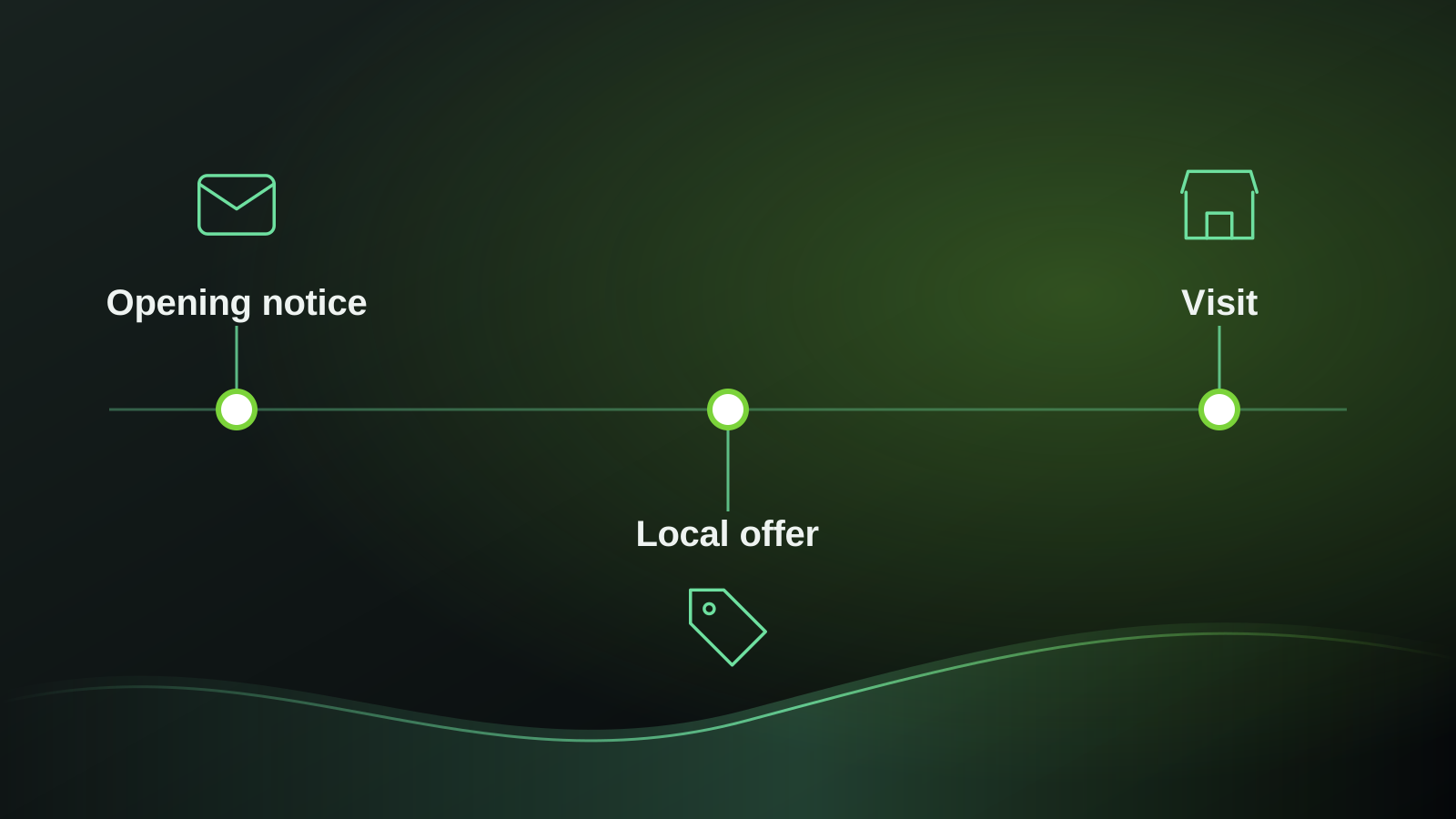
For example, a franchisor opening a new site might run a six-week sequence: a pre-opening page four weeks before, a "save the date" email two weeks before, an opening announcement in launch week, a welcome email after first visit, and a reminder or second-visit offer three weeks later. The timings are a starting point to test, not a rule.
Local offers work best when they solve a real problem for the site, such as a quiet Tuesday afternoon or a new service with spare capacity. Give franchisees a menu of approved offers and templates so they can act quickly without breaking brand standards or pricing rules.
- Set the standard: one CRM, one consent wording, one set of templates owned by the franchisor.
- Tag every contact to a home site, and filter every send by site.
- Build the pre-opening list four to six weeks before each opening.
- Send the opening sequence, then switch new customers to a welcome series.
- Give franchisees approved local offers tied to quiet periods or new services.
- Suppress anyone who has opted out across every list, brand and local.
Measuring email-driven visits
Clicks and bookings are the easiest outcomes to measure. Use a tracked link to the local page or booking system in every email, and record bookings or enquiries by site and by campaign. For walk-in businesses, a unique offer code per campaign, redeemed at the till, gives a direct count.
The fairest test is a holdout. Leave a random share of each site's list out of a campaign, then compare visits or sales between the two groups over the following weeks. The difference is the visits the email actually caused. Report results site by site, so franchisees can see what worked locally.
Watch list health too: sign-ups per site per month, unsubscribes, spam complaints and the share of contacts who have not clicked in a year. Because open rates are unreliable, judge engagement on clicks, bookings and redemptions.
Common mistakes, what good looks like, and supplier questions
Common mistakes include franchisees running separate mailing tools with their own lists, consent wording that names only one party, brand-wide offers sent to customers of sites that do not honour them, no record of who collected each contact, and opening campaigns that start the week the doors open. Another is relying on the soft opt-in for details collected by a different legal entity.
Good looks like one governed CRM, consent that names who will market, a list for each site that grows before opening, a short opening sequence, approved local offers, and monthly reporting of clicks, bookings, redemptions and holdout uplift by site. Our email and franchising pages explain how this fits a wider plan.
- How will consent wording name the brand and the local site, and where will consent records be held?
- When will you rely on the soft opt-in, and how will you confirm who collected each contact?
- How will every contact be tagged to a site, and how will sends be filtered?
- How will you measure visits caused by email, including a holdout group?
- What happens to a site's list when a franchisee leaves?
Put this into practice
Book a discovery call and we will review your channels and results first, then agree what to test.
Plan email for your franchise sitesQuestions and answers
Can a franchise use the soft opt-in for email marketing?
Only within strict limits. The soft opt-in applies when the business sending the email collected the details itself during a sale or negotiation, markets only its own similar products, and offered an opt-out at collection and in every message. Details collected by a separate franchisee or brand company may not qualify.
Who should own customer data in a franchise network?
In most networks, the franchisor owns the CRM and sets the rules, and each customer is tagged to a home site. The franchise agreement should say who owns the data and what happens when a franchisee leaves, subject to what customers agreed to when they signed up.
When should a new franchise site start email marketing?
Four to six weeks before opening is a sensible starting point. A pre-opening page can collect consented sign-ups with a reason to join, such as first access to bookings. That gives the site an audience for its opening announcement rather than starting from nothing on launch day.
How do I measure visits from franchise emails?
Use tracked links to booking pages, unique offer codes redeemed at the till, and a holdout group that does not receive the campaign. Compare visits or sales between the two groups. Report by site, and judge engagement on clicks and redemptions rather than open rates, which privacy features inflate.
What email benchmarks should a franchise expect?
The DMA's 2025 benchmarking report, based on data from seven UK email providers, recorded an average 35.9% open rate and 2.3% unique click rate for 2024. Treat these as broad context. A local list with relevant offers should be judged against its own past results and a holdout group.
References
- Franchise Info, "The results are out: the BFA and NIC Services Group reveals the results of the 2024 National Franchise Survey", 2024
- DMA, "Email Benchmarking Report 2025", 2025
- DMA, "Consumer Email Tracker 2023", 2023
- Information Commissioner's Office, "How do we comply with the PECR electronic mail marketing rules?", 2026
- Womble Bond Dickinson, "New exceptions for non-intrusive cookies: the ICO's updated guidance has landed", 2026
 Alexander